The most extraordinary wineries rarely shout for attention. They operate in a quieter register—where refinement is sensed rather than staged, and where every detail, from the angle of the glassware to the cadence of a private tasting, has been considered with almost obsessive care. For travelers who seek more than a pretty view and a flight of popular vintages, the realm of premium wineries offers a subtler, deeper kind of pleasure: intimacy with place, time, and craftsmanship. This is where wine ceases to be a product and becomes a composed experience—measured, deliberate, and unforgettable.
Below are five exclusive insights that reveal how the world’s most discerning wineries shape those experiences, and how you, as a serious enthusiast, can recognize and enjoy them.
The Quiet Architecture of Privacy
At many truly premium estates, luxury begins with the absence of crowds. Privacy is carefully designed into the architecture and flow of the visit. Instead of a bustling tasting bar, you may find a well-appointed salon, a private library, or a shaded loggia overlooking a single, decisive vineyard block.
These spaces are curated to create conversational distance from the main visitor center—sometimes physically, often psychologically. Soft acoustics, layered lighting, and thoughtfully chosen textures (linen, stone, old wood, hand-thrown ceramics) are not simply aesthetic preferences; they are invitations to slow the tempo of your attention.
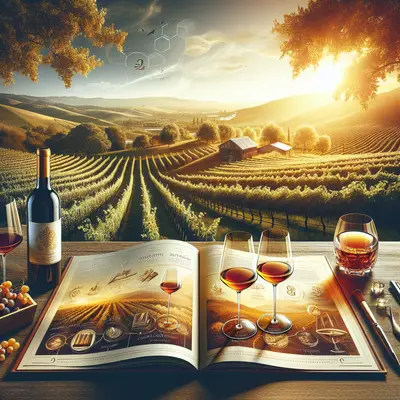
Private tasting rooms are often situated to frame one specific vista: a slope of old vines, a historic cellar entrance, a particular ridgeline that influences the microclimate. That view is part of the story being poured into your glass. You are not just tasting a vintage; you are occupying the vantage point from which the wine was conceived. In these spaces, questions are encouraged, time is elastic, and the luxury is as much about unhurried conversation as it is about the wine itself.
Precision in the Glass: When Serving Ritual Reveals Intent
In the upper tier of wineries, serving rituals become subtle signals of intent and rigor. It begins long before the bottle is opened. The glassware is chosen not merely for elegance but for technical precision: bowl size matched to aromatic profile, rim diameter calibrated to how the wine enters the palate, stem length balancing comfort with temperature control.
Temperature is rarely left to chance. Whites and sparkling wines may arrive slightly warmer than expected, reds slightly cooler—each calibrated to reveal structure rather than to chase easy crowd-pleasing notes. Decanting is not a theatrical flourish but a considered intervention. At some estates, even younger, high-extract reds are briefly double-decanted before you arrive, allowing the wine to compose itself in the glass across the span of your visit.
Pour size may be smaller but more frequent, creating a progression that lets you revisit earlier wines after they have evolved with air. In some of the most meticulous programs, the order of wines deviates from convention: a structured, mineral-driven white might follow a delicate red if the estate’s narrative is built around texture rather than color. The sequence becomes a curated path—not a standard flight.
Vineyard Stories at the Row Level
Luxury wineries increasingly understand that serious enthusiasts want precision, not just romance. Rather than broad phrases like “estate fruit” or “hillside vineyards,” the conversation turns to very specific rows, parcels, and soil transitions. Your host may gesture to a narrow band of vines in the distance and explain how a subtle shift from clay-limestone to fractured schist changes tannin grain and length.
This is terroir communicated in high definition. You might see tasting mats labeled by block name or parcel rather than by grape variety alone. Some properties will pour micro-lots or experimental bottlings that never reach the broader market—single rows, high-elevation fringes, or old-vine selections usually reserved for internal benchmarking.
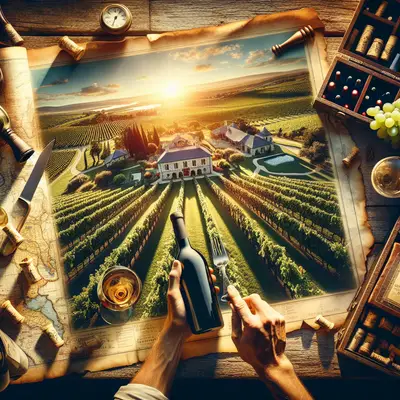
For the observant guest, vineyard walks become a masterclass. The spacing between vines, the height of the canopy, the use of cover crops, and whether you see mechanical tracks or only footprints all hint at the philosophy in play. Premium estates often share how they adjust pruning, leaf-pulling, and harvest timing from one plot to the next, illustrating the granular decisions that separate a good wine from a truly memorable one.
Cellars as Working Sanctuaries, Not Showpieces
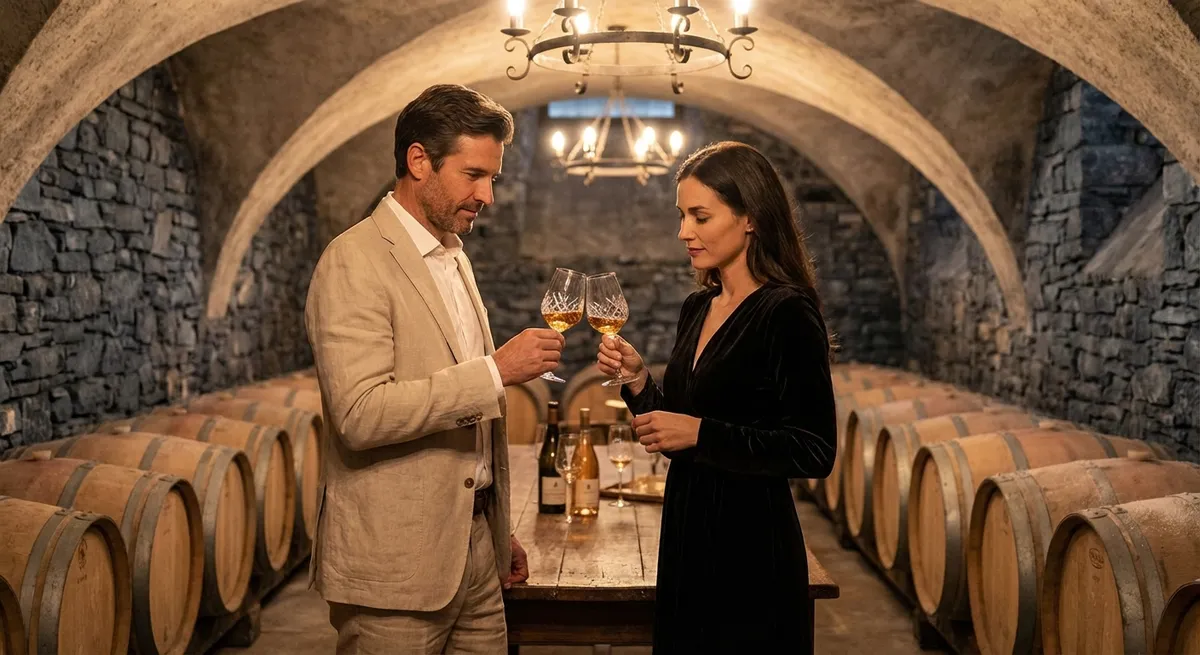
A defining characteristic of elite wineries is that their cellars feel like places of work first, beauty second. Barrels are not staged for postcard symmetry alone; they are arranged for optimal workflow, humidity control, and tasting access. Stainless steel, concrete eggs, amphorae, and large-format casks may all coexist—not as a collection of trends, but as tools suited to different varieties and stylistic goals.
The most compelling cellar visits are those where the aesthetic refinement never disguises the practical reality: hoses coiled with intention, lab benches quietly active, fermentation logs visible, experiments discreetly underway. When you taste from barrel or tank, you are invited into an unfinished conversation. A seasoned guide might pour samples from two lots of the same grape variety—one from older vines, one from a cooler parcel—to demonstrate how blending decisions are made.
Lighting is often low, both to protect the wine and to shift your focus to aroma and texture. Temperature and humidity are tightly controlled, and the difference is perceptible the moment you descend below ground. Even the silence is curated; in many top estates, the cellar is kept hushed by policy, to reinforce concentration during tasting and evaluation. You are witnessing a living archive in slow motion.
Hospitality as an Extension of the House Style
In understated luxury environments, hospitality is not a script; it is an extension of the winery’s identity in human form. The way you are welcomed, the depth of conversation, and even the pacing of your visit reflect the house style as clearly as any label. Some estates favor a scholarly approach, with hosts fluent in geology, viticulture, and regional history. Others lean toward quiet, intuitive service where your preferences are anticipated rather than queried.
Attention to detail is often revealed in what is tailored specifically to you. A personalized tasting booklet with space for your notes, a decanter set aside for a library wine that aligns with your stated interests, or a blind side-by-side designed to challenge your assumptions—these gestures signal that you are not just part of a tour, but part of a curated encounter.
Food pairings, when offered, tend to be focused and minimal rather than lavish: a single, ethereal bite that clarifies a structural element in the wine, regional ingredients used in elevated but restrained ways, intentionally moderate portions that keep your palate alert. The best hosts know when to step back, leaving you alone with the glass and the landscape at key moments. In such settings, luxury is not declared; it is inferred from a thousand small, deliberate decisions that honor your curiosity and your time.
Conclusion
Premium wineries are not defined solely by price, architecture, or acclaim. They live in the interplay between precision and discretion, between the technical and the sensorial. To step into their world is to enter a choreography of details—quietly orchestrated to deepen your understanding of place, craft, and time.
For the devoted wine traveler, recognizing these nuances transforms a visit from a pleasant outing into an enduring benchmark. Once you have experienced a winery that communicates its vision through privacy, precision in the glass, vineyard specificity, working cellars, and exquisitely attuned hospitality, every subsequent tasting is measured against that standard. The reward is not only in the wines you discover, but in the sharpened awareness you carry with you, glass after glass, journey after journey.
Sources
- Napa Valley Vintners – Understanding Napa Valley Terroir - Insight into how site, soil, and microclimate shape premium wine styles
- Wine Institute – Sustainable Winegrowing Practices - Overview of viticultural decisions and their impact on quality estates
- University of California, Davis – Viticulture and Enology - Technical background on winemaking choices used by top wineries
- Decanter – The Art of Decanting Wine - Exploration of why and how fine wines are decanted at serious estates
- Institute of Masters of Wine – Tasting - Professional perspective on structured tasting and service at the highest level
Key Takeaway
The most important thing to remember from this article is that this information can change how you think about Premium Wineries.