True premium wineries are rarely the loudest names in the room. They exist in a quieter register—measured not only by price or scarcity, but by rigor, restraint, and an almost obsessive pursuit of nuance. For the discerning traveler, understanding what truly distinguishes these estates transforms a pleasant visit into an experience of rare depth and memory.
The Invisible Hand of Terroir Stewardship
At genuinely premium estates, terroir is not a marketing slogan; it is a long-term, almost custodial responsibility. You will often find vineyards mapped in meticulous detail, not simply by plot, but by micro-parcel—slope orientation, soil composition, drainage profile, wind patterns, and even historical vine performance across vintages.
The language here is often quietly technical: discussions of rootstock selection for specific subsoils, canopy management tailored to mitigating heat spikes, or precision irrigation designed to stress vines at crucial moments without compromising long-term health. Many of these wineries invest heavily in soil biology—compost teas, cover crops, and minimal tillage—so that vine roots probe deeper each year, tapping subtler mineral and textural dimensions.
For the traveler, one of the surest signs you are in the presence of a serious estate lies not in marble tasting rooms, but in the vineyard walks: viticulturists who speak fluently about clonal material, phenolic ripeness versus simple sugar accumulation, and how their pruning decisions echo decades into the future. Here, terroir is not romantic rhetoric; it is a disciplined, data-informed, and deeply patient craft.
Cellars as Laboratories of Texture, Not Just Flavor
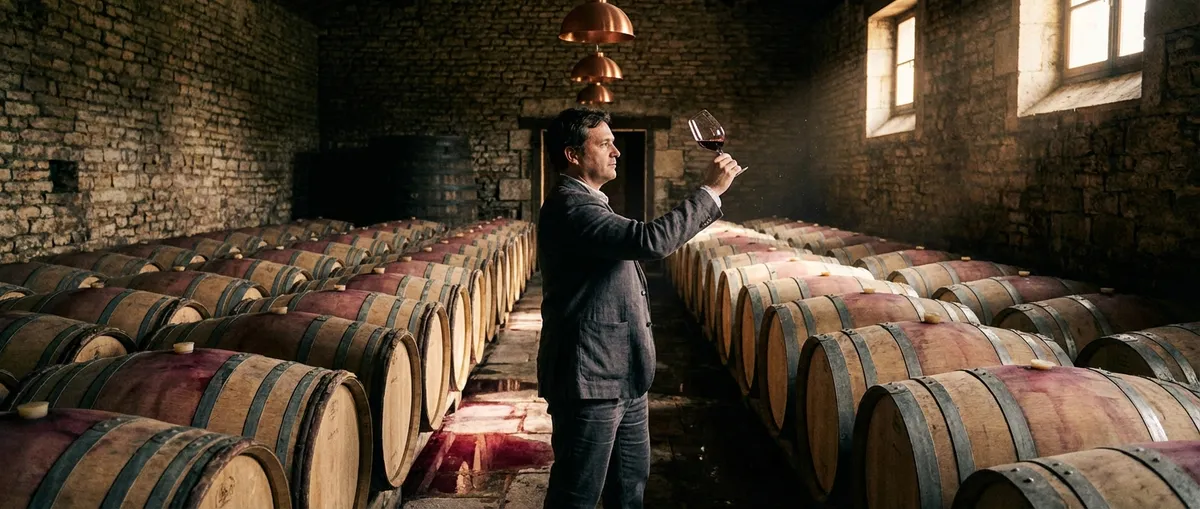
In premium wineries, the cellar is not merely where wine is “stored”; it is the quiet theater where texture is composed. While many visitors look for rows of gleaming barrels, the more telling details are subtler: the mix of coopers, toast levels, barrel ages, and vessel types—concrete eggs, amphorae, large-format foudres—deployed like instruments in an orchestra.
Winemakers at this level are increasingly focused on tannin shape, mid-palate weight, and the way acidity carries flavor, rather than just aromatic intensity. Extended lees contact, judicious bâtonnage, partial whole-cluster fermentations, and carefully staged racking are all used to sculpt how a wine moves across the palate. Oxygen management—both in fermentation and élevage—is treated with surgical precision, balancing the need for gentle evolution against the risk of fatigue or premature oxidation.
You may hear discussions about polymerization, reductive handling, or micro-oxygenation not as trendy techniques, but as finely calibrated tools to align structure with the inherent character of a site. The cellar at a true premium estate is less about spectacle and more about an almost monastic dedication to detail—temperature curves mapped for each tank, tasting panels convened for dozens of blend trials, each iteration nudging the wine toward a more complete expression of place.
Hospitality Curated with the Precision of a Tasting Menu
The most refined wineries understand that hospitality, when done well, does not overshadow the wine—it frames it. Instead of crowded bars and rushed pours, you are more likely to encounter appointments staggered with deliberate gaps, ensuring that each party receives unhurried attention. Glassware is chosen with almost obsessive care: bowl shapes tailored to varietal, stem lengths balanced for both elegance and stability, and polishing standards that allow no trace of lint or residue.
Tastings are increasingly organized as thoughtfully sequenced experiences: vertical explorations of a single cuvée to reveal vintage nuance, comparative flights across soil types, or curated pairings with small, chef-driven bites that highlight contrast and complement. The narrative is never generic; it is woven from the estate’s own history, climate conditions, and farming choices, often guided by hosts with formal wine education and genuine sensory training.
In these environments, silence is used as strategically as conversation. Space is left between pours for reflection, note-taking, or quiet contemplation of the view. The overall impression is less of a “visit” and more of a bespoke salon—one in which every detail, from ambient music to pacing, is designed to heighten perception and recall.
Five Exclusive Insights for the Discerning Enthusiast
For travelers who wish to move beyond surface impressions, the following insights offer a more insider’s lens on premium wineries—nuances often missed on a first visit, but cherished by those who seek true depth.
1. The Real Benchmark Is Consistency in Difficult Vintages
Anyone can make a standout wine in a near-perfect year; the mark of a top-tier estate is how it performs under pressure. Pay special attention to how a winery speaks about challenging seasons—frost, heat spikes, drought, or unexpected rain at harvest.
Premium producers often make the most difficult decisions in these years: ruthlessly low yields, stricter selection at sorting tables, or choosing not to bottle a flagship cuvée at all. When tasting, ask to sample wines from what locals describe as a “complicated” vintage. If the wines remain balanced, energetic, and complete, you are in the presence of a producer whose craftsmanship transcends conditions.
2. Vineyard Mapping and Data Are the New Quiet Luxury
The silent backbone of many leading estates is data—decades of vineyard records, microclimate logs, and detailed harvest metrics. Increasingly, top wineries employ drones, soil conductivity mapping, and sensor arrays to understand their sites at an almost scientific level.
While this might sound clinical, the intention is the opposite: to make fewer assumptions and respond more sensitively to each parcel’s needs. When touring, look for vineyard maps in the tasting room, references to parcel names, or talk of adaptive harvest strategies informed by plant stress monitoring. This fusion of science and intuition is becoming a key differentiator at the high end.
3. Barrel Rooms Reveal Philosophy More Than Wealth
A spectacular barrel hall can impress, but its true interest lies in the choices it reveals. Note the diversity (or intentional lack thereof) of coopers and vessel types. A mix of French, Austrian, or Eastern European oak, plus large foudres or neutral barrels, often signals a nuanced approach where oak is a frame, not a flavor.
If possible, ask about the proportion of new oak in each cuvée and how that has evolved over time. Premium producers tend to move away from ostentatious wood signatures toward integration and finesse, even if it means investing in more expensive, subtler cooperage and extended élevage that ties up capital for longer.
4. Library Programs Are a Window into Patience and Confidence
One of the most telling luxuries is time. Estates that hold back significant quantities of older vintages for library tastings or late releases are not simply engaging in nostalgia; they are testing and proving the longevity of their wines.
If a winery offers a curated library tasting, take it. The opportunity to taste a wine across a decade or more reveals not only ageability but stylistic philosophy: whether the wines evolve toward silk and savor or maintain tension and precision with age. Maintaining such a library demands storage space, inventory discipline, and financial restraint—hallmarks of producers who see their work on a generational horizon.
5. Discretion and Understatement Often Signal True Prestige
The most coveted wineries often eschew overt flash. Signage can be modest, social media presence restrained, and publicity quietly deflected toward the wines rather than personalities. Allocations may be managed through longstanding relationships with collectors, sommeliers, and a small circle of importers rather than mass mailing lists.
In these settings, access itself becomes a form of curation. Personalized notes in allocation letters, invitations to intimate release events, or quiet recommendations from trusted sommeliers are the channels through which one enters this world. For the traveler, building genuine rapport—asking thoughtful questions, revisiting over time, and showing real curiosity—often opens doors that cannot be forced by status alone.
Conclusion
Premium wineries reveal their true nature not in a single glass, but across time—through patient stewardship of land, a laboratory-like respect for detail in the cellar, and hospitality that feels both elevated and deeply human. For the discerning traveler, the reward lies in learning to read these subtler cues: the quiet confidence of a cellar that embraces difficult vintages, the discipline of a library program, the precision of a thoughtfully curated tasting.
As you explore the world’s great wine regions, seeking out these signs of depth and intention transforms each visit from a pleasant excursion into a rarefied experience—one in which every vineyard row, every barrel, and every pour becomes part of a larger, finely tuned narrative of place.
Sources
- [Wine Institute – Sustainable Winegrowing Practices](https://wineinstitute.org/our-work/sustainable-winegrowing/) - Overview of advanced vineyard and winery sustainability efforts common among top estates
- [UC Davis Department of Viticulture and Enology](https://wineserver.ucdavis.edu/industry-info/viticulture) - Technical background on viticultural practices, terroir expression, and vineyard management
- [Decanter – Understanding Oak in Winemaking](https://www.decanter.com/learn/understanding-oak-in-winemaking-329903/) - In-depth discussion of barrel choices, coopers, and their impact on wine style and texture
- [JancisRobinson.com – The Importance of Vintage Variation](https://www.jancisrobinson.com/learn/vintage) - Explores how vintages shape wine quality and why challenging years reveal true craftsmanship
- [Napa Valley Vintners – Library Wines and Cellaring](https://napavintners.com/napa_valley/library_wines.asp) - Explains library programs, aging potential, and why top wineries invest in long-term cellaring
Key Takeaway
The most important thing to remember from this article is that this information can change how you think about Premium Wineries.