The world’s most coveted wineries rarely shout for attention. They move in hushed, deliberate rhythms—where craftsmanship is measured not in spectacle, but in the subtleties only a devoted palate will notice. For the traveler who seeks more than a photo in the vines, premium wineries offer a different kind of luxury: time, intention, and a profound respect for place. This is not about labels that impress a crowd, but about experiences that recalibrate how you understand wine itself.
Below are five exclusive, quietly transformative insights that deepen the way enthusiasts engage with the finest estates—and illuminate what truly sets them apart.
The Precision of Place: Micro-Parcels and the Art of Nuance
At the highest level, “terroir” is not a poetic buzzword; it is a technical obsession. Premium wineries increasingly focus on micro-parcels—minutely defined sections of a vineyard that may differ by only a few meters in elevation, a subtle shift in soil type, or a slight variation in wind exposure. To the untrained eye, they appear identical. To the estate, each parcel is a distinct voice in the final cuvée.
In practice, this means separate harvesting, separate fermentations, and separate élevage (maturation) for these tiny plots. Barrels in the cellar are marked not just with grape variety and vintage, but with row numbers, soil composition, and rootstock. During blending, winemakers may use only a small percentage from a particular parcel—yet its aromatic lift or structural tension can redefine the entire wine. Enthusiasts who are invited to taste parcel by parcel quickly understand why some bottles feel almost “sculpted”: they are not merely made, they are composed.
For the visitor, the privilege lies in walking those specific rows, feeling the underfoot crunch of limestone or clay, and then tracing that texture back into the glass. It is in these micro-details that the philosophy of a premium winery becomes tangible.
Time as a Luxury Material: Extended Aging Beyond Expectation
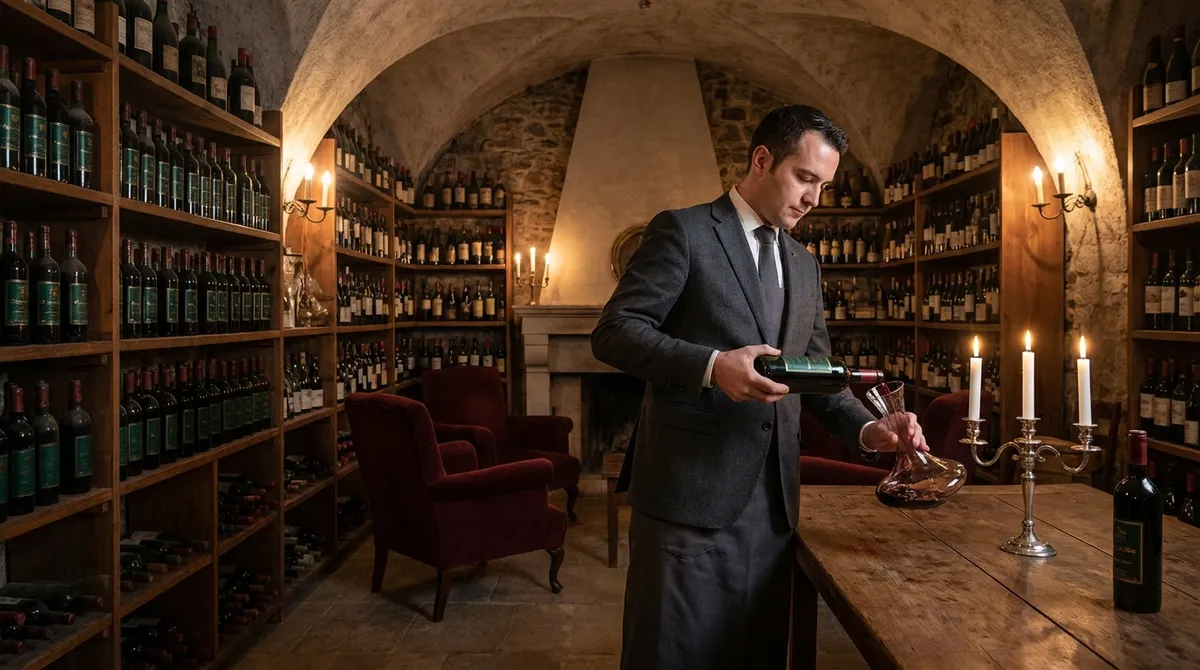
At many estates, time is the most extravagant resource. While commercial wineries are pressured to release wines quickly, premium properties often treat time as an essential ingredient—one that cannot be accelerated without losing character. From extended lees contact in whites to decade-long bottle aging in reds, these houses invest years, sometimes decades, before a single bottle meets a guest.
This devotion to patience manifests in subtle but profound ways. Whites gain texture and quiet complexity: notes of brioche, almond, and subtle salinity that only emerge with prolonged lees aging. Reds shed their youthful aggression, revealing secondary and tertiary aromas—dried flowers, forest floor, fine leather—that transform a wine from impressive to haunting. Sparkling wines, too, become deeper and more resonant when left on lees far beyond legal minimums.
For the collector or traveler, access to “library releases” or chronologically curated tastings is often the defining experience of a premium visit. Tasting the same cuvée across a 10–20 year span reveals how the estate intends its wines to be enjoyed—not at release, but at harmony. In these settings, time is not an enemy of freshness; it is the artisan that polishes every edge.
The Quiet Engineering of Atmosphere: Architecture, Light, and Acoustics
At refined wineries, the setting is not decorative; it is engineered to shape perception. Architecture, light, and even acoustics are calibrated so that the environment becomes an extension of the wine. Concrete, glass, stone, and wood are selected not just for beauty, but for how they modulate temperature, sound, and the way light falls onto the glass.
In many high-end cellars, ambient noise is intentionally softened. The quiet encourages attention, allowing subtle aromatic evolutions to be noticed rather than missed. Natural light is often filtered or indirect, ensuring that colors in the glass are accurate and that guests are not fatigued by glare. Tasting counters and tables are specified at precise heights for comfort during extended, contemplative sessions. Seating, fabrics, and even the weight of the stemware are chosen to encourage a slower pace and more deliberate engagement.
The result is a kind of sensory choreography. You are not simply poured a flight; you are invited into a spatial composition where each element—from the coolness of a stone wall to the warmth of a wooden ceiling—reinforces what is in the glass. For enthusiasts attuned to detail, this engineered serenity becomes a form of luxury in its own right.
Beyond the Winemaker: The Discreet Influence of the Vineyard Team
While winemakers often receive the spotlight, the most quietly influential figures at top estates are those who rarely appear in photographs: the vineyard manager and their team. In premium environments, decisions in the vineyard are made with a surgical level of precision—down to individual vines rather than entire blocks.
Canopy management is tailored vine by vine: leaves are plucked or left intentionally to balance shade and sun, depending on the vintage conditions. Crop thinning is not applied uniformly but selectively, responding to each plant’s vigor and the subtle cues of the season. Increasingly, biodynamic and regenerative practices are adopted not as marketing language, but as long-term investments in soil vitality and vine resilience. The objective is not maximal yield, but maximal expression.
Visitors who are granted a walk with the vineyard manager, rather than only the tasting room host, often experience a shift in perspective. The conversation moves from “What’s in this blend?” to “Why does this vine behave differently from the one beside it?” Those who understand that premium wine is shaped first by the invisible decisions in the field begin to read every glass as a record of thousands of quiet, manual choices.
The Art of Reserved Hospitality: Tailored Experiences, Not Performances
True luxury in wine hospitality is increasingly defined by restraint and customization rather than theatrics. Premium wineries often eschew crowded tasting bars in favor of timed, limited appointments. Each visit is curated less like a tour and more like a private consultation—subtle, attentive, and unhurried.
Rather than a script, hosts draw from a flexible repertoire, adjusting depth and focus based on each guest’s knowledge and curiosity. A serious Burgundy collector might be offered comparative barrel samples or single-vineyard verticals without fanfare. A traveler newer to fine wine might be guided gently through structure, aroma, and aging potential, without condescension or jargon. Some of the finest estates never vocalize their most exclusive offerings; they simply read the guest and open the appropriate door.
In these settings, luxury reveals itself not in overt extravagance, but in micro-considerations: the timing of a perfectly chilled bottle; the quiet arrival of a palate-cleansing bite between pours; the ability to segue seamlessly from technical discourse into effortless conversation. For the enthusiast, these visits become less about being impressed and more about feeling genuinely understood.
Conclusion
Premium wineries are often described in terms of rarity, price, and prestige. Yet for those who seek them out with intention, their most compelling qualities are more elusive: a reverence for place distilled into micro-parcels, an almost radical commitment to time, a meticulously tuned environment, a vineyard culture of minute observation, and a hospitality style that prioritizes discretion over display.
These are not experiences designed for everyone—and that is precisely their allure. For the traveler who values refinement over spectacle, these quiet rituals form the true vocabulary of luxury in wine. To step into this world is not simply to taste better bottles, but to encounter a deeper, more disciplined way of seeing—and savoring—the vine.
Sources
- Napa Valley Vintners – What Makes Napa Valley Unique – Overview of terroir, microclimates, and premium winegrowing practices in Napa Valley
- Burgundy Wine Board (BIVB) – Climats and Terroir – Detailed explanation of Burgundy’s micro-parcels (“climats”) and their influence on style
- Champagne Bureau USA – Méthode Champenoise and Aging on Lees – Insight into extended lees aging and its impact on complexity and texture
- UC Davis Department of Viticulture & Enology – Technical resources on viticulture, winemaking, and the role of vineyard and cellar practices in wine quality
- International Organisation of Vine and Wine (OIV) – Official standards and technical documents on viticulture, oenology, and global best practices in premium wine production
Key Takeaway
The most important thing to remember from this article is that this information can change how you think about Premium Wineries.