There is a tier of wineries that rarely advertises, seldom courts the spotlight, and almost never appears on group tour itineraries—yet quietly defines the pinnacle of contemporary wine culture. These are estates where detail is an obsession, time is treated as an ingredient, and hospitality feels less like service and more like a discreet art form. For the traveler who values nuance over noise, premium wineries offer something far rarer than “luxury”: they offer access to the inner logic of excellence.
Below are five exclusive, under-discussed insights that reveal how these estates think, work, and host—and how you, as a serious enthusiast, can engage with them on their own refined terms.
The Architecture of Restraint: Why the Best Wineries Rarely Shout
Premium wineries understand that true luxury is suggested, not declared. Their architecture is rarely ostentatious; instead, it is designed to disappear into landscape, light, and silence. You may notice stonework that echoes the region’s geology, or a façade that hides the cellar behind earth and vine rather than glass and steel. This aesthetic restraint is not merely decorative—it is philosophical.
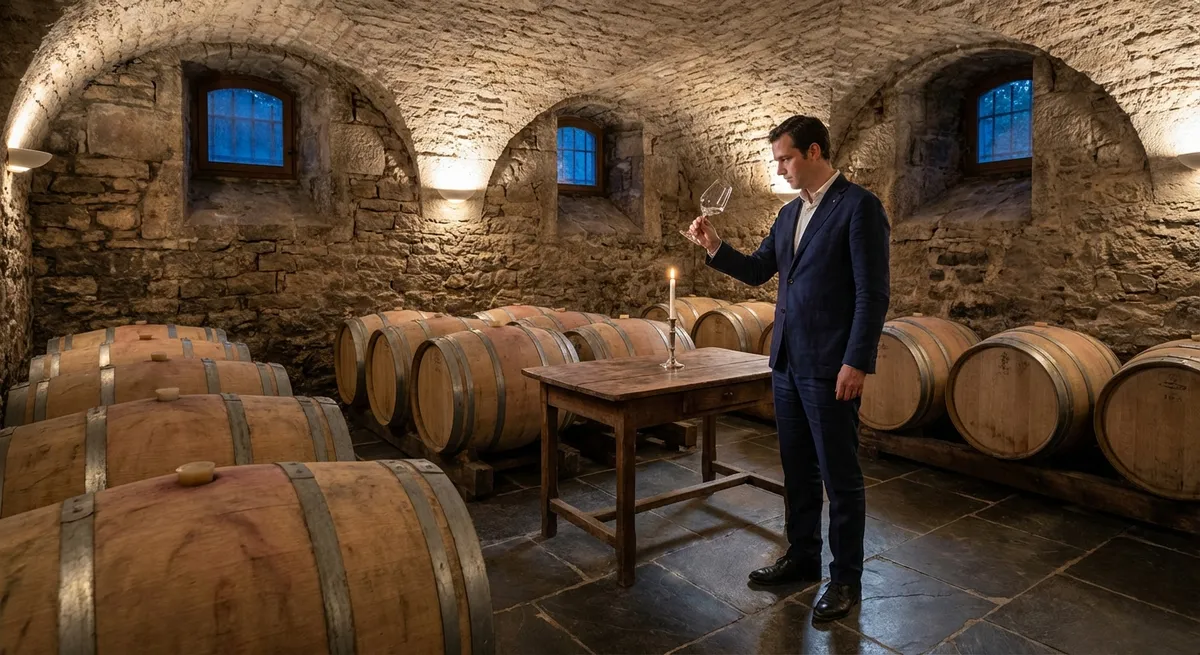
The best estates design their spaces to control temperature, light, and acoustics as precisely as they control fermentation. Barrel halls are often partially buried, not for drama, but for thermodynamic stability. Window placements are calculated to minimize UV exposure while allowing soft, lateral light that flatters color in the glass. Even the geometry of tasting rooms—curved counters, generous spacing between tables, high ceilings—serves to absorb sound and allow conversations to remain low and unhurried. To experience these places fully, pay attention to what you do not see and hear; absence, here, is a deliberate form of hospitality.
Time as a Luxury Ingredient: Extended Aging and Invisible Decisions
In premium cellars, time is treated with the same reverence as terroir. What distinguishes these estates is not just the duration of aging, but the precision with which they choreograph it. Wines may spend months longer on lees to gain texture and complexity, or see a sequence of vessels—concrete, large casks, then fine-grain oak—each chosen for a specific influence on aromatics and structure.
The most thoughtful producers draw on both empirical data and intuition. They track dissolved oxygen, trichloroanisole (TCA) risk, barrel oxygen ingress, and phenolic evolution, yet tasting panels remain the final arbiter. Decisions about when to rack, when to bottle, and how long to cellars bottles before release are rarely left to a schedule; they are revisited repeatedly, sometimes at the cost of cash flow. This is one of the quiet signatures of a premium winery: the willingness to defer revenue until a wine truly aligns with the estate’s internal standard. As a visitor, ask not “How long in oak?” but “How did you decide when it was ready?”—the answer will tell you everything about their ethos.
Precision in the Vineyard: Beyond Organic and Biodynamic Labels
Many top wineries embrace organic or biodynamic frameworks, yet their real distinction lies beyond certification labels. At this level, viticulture becomes a discipline of microscopic precision and long-term restraint. Instead of talking only about “sustainability,” these estates speak in the language of soil porosity, root depth, clonal selection, and canopy architecture. Their most important tools are often mundane: soil pits, pen knives, temperature probes, leaf thickness between finger and thumb.
Premium vineyards are frequently managed on a block-by-block—or even row-by-row—basis. Harvest dates may differ by a day or two between parcels mere meters apart, based on subtle differences in slope, wind exposure, or subsoil composition. Water is not just “saved”; it is timed with surgical exactitude to nudge vines towards small, concentrated berries. Cover crops are chosen not for aesthetics but for their impact on nitrogen, compaction, and microbiome health. For the attentive visitor, vineyard walks become the true tasting: the story of the wine is written in rootstock, pruning scars, and the quiet absence of overcropped vines.
Hospitality by Invitation: How Premium Wineries Curate Access
Unlike more commercial properties, premium wineries often treat hospitality as an extension of their cellar philosophy: controlled, intentional, and highly specific. Appointments are usually limited not as a strategy of manufactured scarcity, but as a necessary condition for depth. Fewer guests allow the estate to align each visit with the rhythms of harvest, bottling, or blending, and to ensure tastings feel more like a conversation than a performance.
Expect fewer “flight options” and more curated progressions, where each wine is selected for what it reveals about a particular vintage, parcel, or technique. It is common for hosts—often key members of the winemaking or viticulture team—to adapt the experience in real time as they gauge your curiosity, knowledge, and pace. Guests who arrive on time, ask grounded questions, and show genuine focus are frequently rewarded with unadvertised touches: a barrel sample, a comparison of trial blends, or a look at an experimental lot that may never be sold publicly. In this world, access is not purchased; it is earned through attentiveness and respect.
The Collector’s Glass: How Premium Wineries Guide You Beyond the Tasting Room
Premium wineries understand that their wines are rarely at their true peak when you taste them on site. To bridge the gap between present experience and future pleasure, they increasingly take on the role of long-term advisors. Cellar recommendations are no longer generic (“age 5–7 years”) but calibrated to your storage conditions, tolerance for evolution, and preferred style—youthful energy versus tertiary complexity.
Some estates maintain detailed records of past vintages’ performance, drawing on vertical tastings and laboratory data to refine their drinking windows. The most forward-thinking producers discreetly suggest serving temperatures, stemware shapes, and decanting protocols not as rigid rules, but as thoughtful starting points for experimentation at home. In private tastings, they may guide you through comparative pours—young vs. mature, different decanter approaches, alternate temperatures—to help you understand how their wines behave across decades. This is the ultimate privilege of the premium winery visitor: to leave not just with bottles, but with a framework for stewarding them well.
Conclusion
The world of premium wineries is not defined by marble foyers or price tags, but by an almost monastic commitment to nuance. Architecture serves silence and stability; time is managed with patient precision; vineyards are tended leaf by leaf; hospitality unfolds like a bespoke conversation; and the relationship with the guest extends far beyond the day of the visit. For the serious wine traveler, these estates offer something richer than spectacle: a rare invitation to think, taste, and collect with greater intention.
Seek them out quietly. Arrive with curiosity. And let their measured pace recalibrate not only how you drink wine, but how you experience time itself in the glass.
Sources
- University of California, Davis – Viticulture and Enology - Overview of scientific principles behind grape growing and winemaking at a leading research institution
- Wine Institute – Sustainable Winegrowing - Industry perspective on advanced sustainability practices used by top-tier wineries
- Napa Valley Vintners – Aging and Cellaring Wine - Guidance on how premium wines evolve over time and best practices for cellaring
- Decanter – The Role of Oak in Winemaking - Detailed discussion of oak aging decisions and their impact on fine wine style
- Institute of Masters of Wine – Fine Wine and Terroir - Professional insights into how vineyard and cellar choices shape the character of premium wines
Key Takeaway
The most important thing to remember from this article is that this information can change how you think about Premium Wineries.