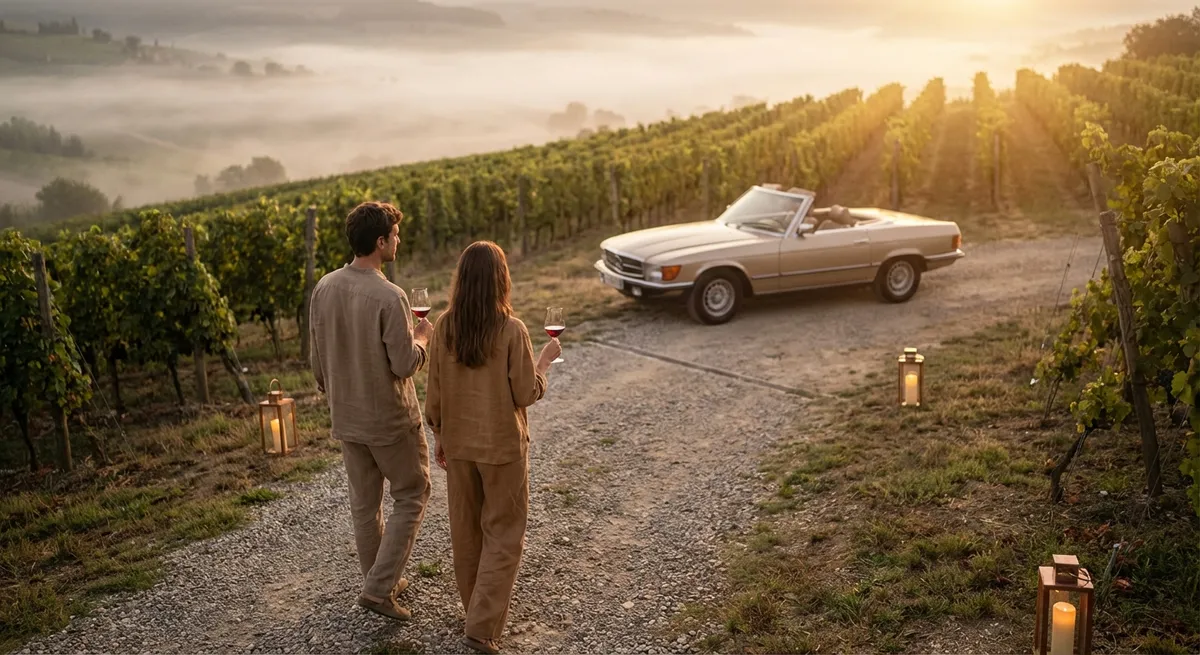
There is a particular quiet that settles over a vineyard in the early hours—a poised stillness that seems to hold its breath just before the day’s work begins. For the discerning wine traveler, this is where the true magic of a vineyard visit resides: in the textures between the rows, the cadence of the cellar, and the understated rituals that shape every bottle. A vineyard visit, when thoughtfully curated, becomes far more than a tasting; it evolves into an intimate encounter with time, place, and craft.
Below, discover five exclusive insights that transform an ordinary tour into a deeply nuanced, memorably luxurious experience.
The Vineyard Before the World Awakes
There is no substitute for experiencing a vineyard in its earliest light. Arriving before standard visiting hours allows you to witness the estate in its most authentic state—when the team is focused on the vines and the cellar, not on presentation.
Morning visits reveal subtleties the midday crowd never sees: the temperature gradient between the top and bottom of a slope; the way mist hangs in low-lying parcels; the distinctive perfumes of soil and foliage before the sun lifts them away. This is when vineyard workers might be out checking canopies, assessing fruit set, or walking the rows to gauge ripeness. For the thoughtful traveler, these quiet observations become a living map of terroir—how wind, aspect, and elevation converge to shape what you eventually taste in the glass.
When booking, request an early access slot or a “pre-opening vineyard walk” with a viticulturist or estate host. Ask to compare grapes from different parcels, feel the soil in your hands, and note how the air feels in each block. Later, when you taste the wines from those same plots, the textural memory of that morning—cool air on your skin, damp earth underfoot—will deepen your appreciation of the final blend.
The Cellar as a Living Library of Time
A cellar is often treated as a backdrop for a tasting, but for the perceptive visitor, it is an archive of the estate’s decisions, philosophies, and risks over decades. Barrel shape, wood origin, age, toast level, and arrangement are all clues to the house style. How many foudres or concrete tanks do you see? Are amphorae tucked away in a corner, or is stainless steel predominant? Every material is a deliberate choice about texture, aromatics, and longevity.
Ask to compare wines at different elevage stages—one still in barrel, another in tank, perhaps a finished bottle from the same vintage. Notice how the tannins shift, how the fruit expression evolves, and how the structure tightens or relaxes. A guided tasting “in situ” beside the respective vessels elevates your understanding from theory to sensation.
Pay attention to the atmosphere: Is the cellar cool and humid with moss on the walls, indicating traditional underground aging, or sleek and temperature-controlled with cutting-edge automation? The environment speaks volumes about where the estate sits on the spectrum between heritage and innovation. Capturing a few discreet photographs (when permitted) of barrels, tanks, and aging bottlings creates visual anchors that make your social media posts feel both aesthetic and informed.
Tasting by Parcel: Reading the Landscape in the Glass
Most visitors experience an estate’s wines as blended, finished expressions. Yet the true connoisseur’s experience lies in tasting components—by parcel, clone, or micro-lot—before they are woven into the final cuvée. This is where terroir stops being an abstract word and becomes a tangible, almost palpable reality.
If the estate offers a “single-parcel preview” or “winemaker’s blending flight,” seize it. Even two glasses from neighboring blocks can feel astonishingly different: one brighter, more linear and saline; the other richer, with plush fruit and broader shoulders. These micro-differences are the raw vocabulary from which the estate composes its signature wines.
Engage the winemaker or host with questions that move beyond the usual:
- Which parcels are considered the backbone of the grand vin?
- Are there plots that rarely shine on their own but are indispensable for balance?
- How did a particular vintage express itself differently across your highest and lowest altitude blocks?
For sharing on social media, translate these technical nuances into elegant, accessible language: “Two neighboring parcels, separated by a few meters and a subtle shift in slope, translated into one wine that whispered of wet stone and citrus zest, and another that unfurled in darker, more silken tones.” This not only conveys sophistication but also invites your audience into the deeper story behind each sip.
Time in the Glass: The Quiet Luxury Most Guests Overlook
In many tasting rooms, wines are poured, discussed briefly, and then hastily replaced by the next flight. The true luxury is not in the number of wines you taste, but in the time you are allowed with each glass. Oxygen is a powerful interpreter: it reveals layers, refines edges, and brings you closer to the wine’s inner architecture.
Whenever possible, request a shorter list of wines in exchange for a more relaxed, contemplative tasting window. Start with a quiet minute simply observing: color, viscosity, and how aromatics emerge without agitation. Then return to each glass over 10–20 minutes. Note how the bouquet evolves—does it open from citrus and white flowers into stone fruits and honey? Do red fruits give way to spice, leather, or forest floor?
This practice is particularly revealing with structured reds or age-worthy whites. You’ll gain a clear sense of the wine’s potential longevity and its likely trajectory in your cellar. Mention in conversation—and in your posts—how the wine changed with time rather than listing simple flavor notes. For example: “At first, the wine felt tightly cinched, all graphite and dark cherry. Fifteen minutes later, it relaxed into something more generous, with a filigree of violet and cocoa along the edges.” This demonstrates a collector’s mindset, one that values evolution over immediacy.
Private Pairings: When the Vineyard Meets the Table
The crescendo of a truly refined vineyard visit often occurs away from the tasting bar—in a secluded dining room, under a pergola overlooking the vines, or at a chef’s table tucked discreetly beside the kitchen. Here, wine and cuisine engage in a dialogue that reveals the estate’s full expressive range.
Seek out estates that collaborate with resident or partner chefs to design pairing menus around specific cuvées and vintages. The most memorable experiences are not about opulence for its own sake, but about precision: a delicate adjustment in acidity to complement a wine’s tension, a textural echo between a dish’s silkiness and a wine’s tannin grain, or a subtle seasoning choice that amplifies minerality.
When booking, inquire whether the chef can tailor one course to feature a wine served in two vintages side by side. The same dish framed by, say, a cooler vintage and a warmer one showcases how climate subtly re-sculpts the dining experience. Discuss with your host how the pairing might change if the wine were served slightly cooler or warmer, or decanted longer. These details reveal the estate’s seriousness about hospitality at the highest level.
For social media, photograph the table as a composed still life—glassware glinting, plates artfully restrained, the vineyard visible just beyond. Anchor your caption not in excess, but in harmony: “A single dish, mirrored by two vintages, turned dinner into a study in time, texture, and light.”
Conclusion
A vineyard visit worthy of the refined traveler is not defined by the length of the tasting list or the prestige of the label alone. It is shaped by quiet access to crucial moments: first light in the vines, unhurried time in the cellar, illuminating parcel tastings, patient observation in the glass, and thoughtfully orchestrated pairings.
When approached with intention, each estate becomes a distinct chapter in your personal atlas of taste—a place where geography, climate, craft, and time intersect in a single, meticulously crafted pour. For those willing to look beyond the surface and linger with the details, vineyard visits cease to be simple excursions and become instead a series of velvet horizons: expansive, layered, and endlessly worthy of return.
Sources
- [U.C. Davis – Terroir and the Role of the Vineyard Site](https://wineserver.ucdavis.edu/industry-info/enology/terroir) – Academic overview of how soil, climate, and topography influence wine character
- [Wine Institute – How Wine is Made](https://www.wineinstitute.org/resources/winefactsheets/article86) – Clear explanation of cellar practices and winemaking stages relevant to understanding visits
- [Decanter – Understanding Single-Vineyard Wines](https://www.decanter.com/learn/understanding-single-vineyard-wines-295879/) – Insight into parcel-based wines and why they matter to serious enthusiasts
- [James Beard Foundation – The Art of Food and Wine Pairing](https://www.jamesbeard.org/blog/the-art-of-food-and-wine-pairing) – Discussion of how chefs and sommeliers think about pairing, echoing themes in private estate experiences
- [OIV (International Organisation of Vine and Wine)](https://www.oiv.int/en/what-we-do/expertise) – Authoritative technical context on viticulture and enology practices worldwide
Key Takeaway
The most important thing to remember from this article is that this information can change how you think about Vineyard Visits.