There is something irresistibly shareable about cultures that excel at understatement. Today, one of the most talked‑about social sensations is the “Very Finnish Problems” Instagram account, where ultra‑dry humor and modest everyday annoyances have captured the imaginations of more than a hundred thousand followers. As this niche, hyper‑specific page trends globally, it signals a broader shift: in a world of loud luxury and overexposed influencers, subtlety, restraint, and cultural nuance are suddenly aspirational again.
Premium wineries are paying attention. The same energy drawing people to wry, understated Finnish memes is drawing discerning travelers toward quieter, more considered expressions of luxury—vineyards where attention to detail whispers instead of shouts, and where the experience is crafted for those who notice the small things. Inspired by the rise of “Very Finnish Problems” and the broader fascination with understated culture right now, we explore how top-tier wineries are redefining premium experiences for an audience that values discretion over spectacle.
Below, discover five exclusive, insider-level shifts unfolding right now in the world’s most refined cellars and estate experiences.
The Rise of “Anti-Showcase” Tasting Rooms
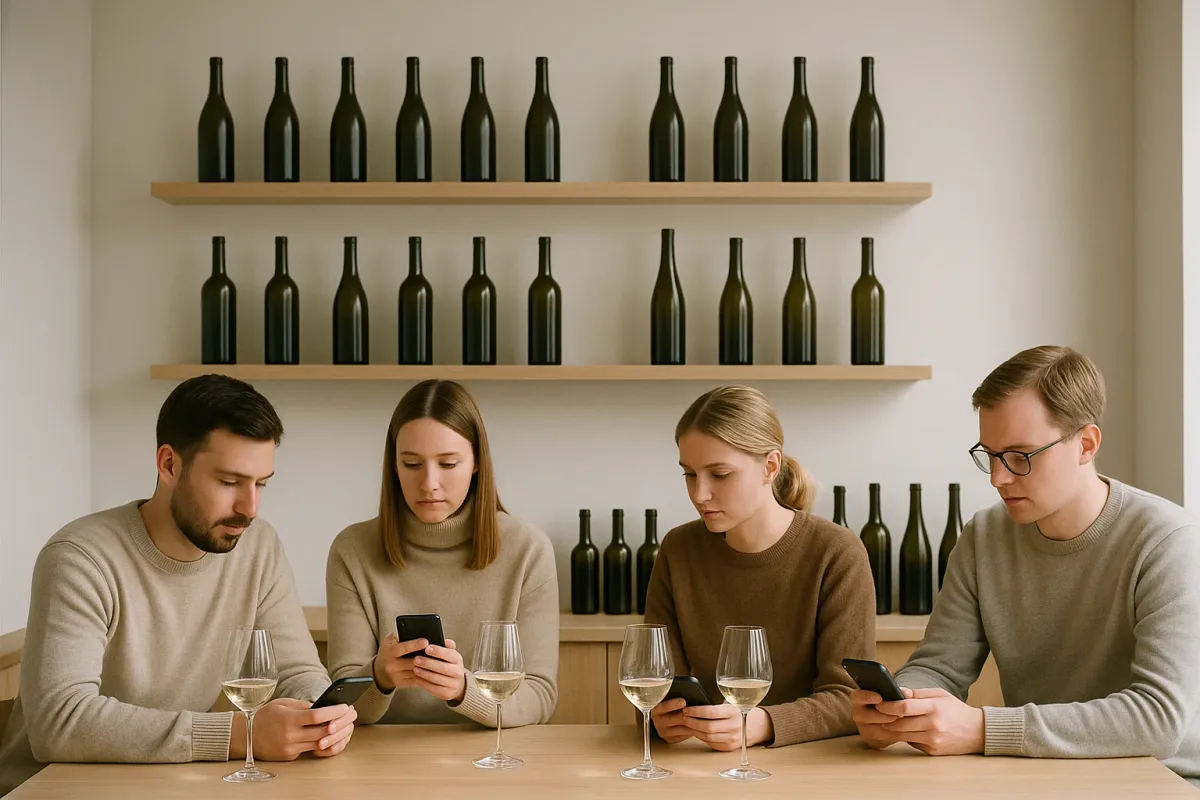
As viral culture celebrates the understated charm of “very Finnish” minimalism and self‑irony, some of the world’s most coveted wineries are quietly stepping away from grand, theatrical tasting rooms in favor of deliberately restrained spaces. In regions from Napa to Burgundy, new premium hospitality builds are borrowing from Nordic and Japanese design cues: pale woods, low visual noise, natural light, and a near‑monastic respect for calm. Rather than dazzling guests with chandeliers and marble, these “anti‑showcase” rooms place the wine at the visual and emotional center—Riedel stems aligned with architectural precision, bottle labels rendered almost as typographic art, and vistas framed like paintings through large, unadorned windows. The goal is not to overwhelm, but to create a sense of quiet presence in which aroma, texture, and finish become the true spectacle. For serious wine lovers, this gentler aesthetic offers something far more luxurious than a selfie‑ready backdrop: the space to pay deep attention.
Hyper‑Local Climate Rituals Replace Generic Luxury Touchpoints
The cultural specificity that makes “Very Finnish Problems” so addictive—the endless jokes about weather, darkness, and social reserve—has its parallel in how leading estates are now curating their guest journeys. Instead of offering the same high‑end clichés (standard charcuterie boards, generic “reserve” flights, interchangeable playlists), premium wineries are designing rituals that could only exist in that exact place, in that exact climate. In coastal regions, late‑afternoon seatings are timed to the moment the maritime fog rolls in; in continental zones, tastings might pivot seasonally from sunny terrace verticals to candlelit library pours as the first frost settles over the vines. Some estates are even syncing release events to hyper‑local natural cues—wildflower blooms, migratory bird arrivals, or the first morning the valley wakes in full mist. These rituals create a quiet form of exclusivity: not defined by price, but by presence. You cannot stream these conditions; you must be there, at that moment, tuned into the land as closely as the winemaker.
The New Prestige: Single‑Parcel Narratives Instead of Celebrity Labels
While celebrity culture and viral scrutiny dominate headlines—from pop icons navigating health struggles to young stars facing relentless commentary—premium wineries are increasingly pursuing the opposite strategy. Instead of attaching their prestige to famous names, they are investing deeply in the storytelling around their least obvious assets: tiny parcels of vines, obscure clones, or formerly overlooked slopes catching a particular morning light. Collectors are responding. Demand is rising for micro‑cuvées defined not by status symbolism but by narrative density: the old vine plot that survived a historic frost, the north‑facing terrace that ripens just a week later, the limestone seam that gives a saline edge to the finish. Estate hosts are becoming more like cultural interpreters than salespeople, guiding guests through the emotional topography of a vineyard row by row. For the enthusiast, this shift feels refreshingly honest—prestige that comes not from a name on the label, but from the lived history in the glass.
Private Spaces Curated for Reflection, Not Performance
As social media debates rage over parenting styles, body image, and what should or shouldn’t be shared online, a growing segment of high‑end travelers is seeking spaces where they do not have to perform at all. The most forward‑thinking wineries are designing for that desire. Rather than building ever larger communal decks or photo‑op installations, they are quietly carving out secluded tasting loggias, library rooms, and view‑framed corners intended for unhurried contemplation. Imagine a small, stone‑floored room overlooking a single block of Pinot Noir, with a curated selection of back‑vintage bottles and a host who knows when to leave you alone. Or a shaded grove above the estate, where a picnic tasting appears without fanfare, accompanied only by the sound of insects and the distant hum of tractors between rows. These are not spaces built for viral moments, though they may end up there; they are built for the rare luxury of being fully off‑stage, even if just for a flight.
Textural Obsession: The Quiet Frontier of Premium Winemaking
In an online world increasingly saturated with quick visuals and snap judgments, some of the most ambitious wineries are doubling down on something that cannot be captured in a photo: texture. For serious oenophiles, this is where the most exciting innovation is happening right now. Estates are refining their oak programs with surgical precision—mixing barrel sizes, stave thicknesses, and toasting regimes to sculpt tannin like silk rather than armor. Concrete eggs and clay amphorae are being used not as décor, but as instruments to fine‑tune mid‑palate weight and energy. Extended lees contact is calibrated to the week, sometimes the day, chasing a very specific kind of tension between creaminess and lift. Tasting appointments at this level often include comparative pours—same vineyard, same vintage, different élevage—designed for guests who want to feel, not just taste, the architecture of a wine. It is a quiet, almost meditative revolution: less about “big” flavors, more about how the wine actually moves across the tongue.
Conclusion
As understated, culturally specific content like “Very Finnish Problems” captivates global audiences, it reveals a deeper craving for nuance, subtlety, and inside knowledge—precisely the qualities that define the new frontier of premium winery experiences. The most thoughtful estates are stepping away from spectacle and embracing a quieter, more disciplined form of luxury: restrained design, place‑bound rituals, parcel‑driven narratives, refuge from performative culture, and an almost obsessive attention to texture. For travelers and collectors who value refinement over noise, this is a uniquely exciting moment. The next time you plan a wine journey, look not for the loudest estate on your feed, but for the one whose elegance is almost easy to miss—until you are there, glass in hand, realizing that the real luxury lies in everything they chose not to shout.
Key Takeaway
The most important thing to remember from this article is that this information can change how you think about Premium Wineries.