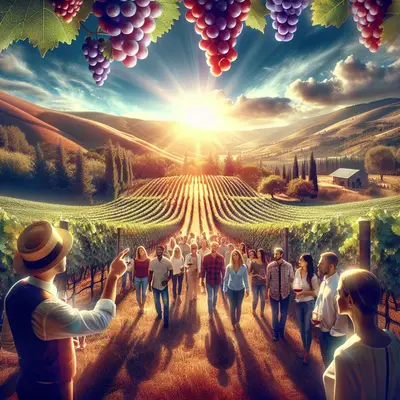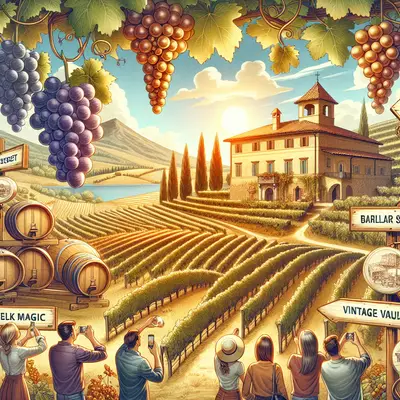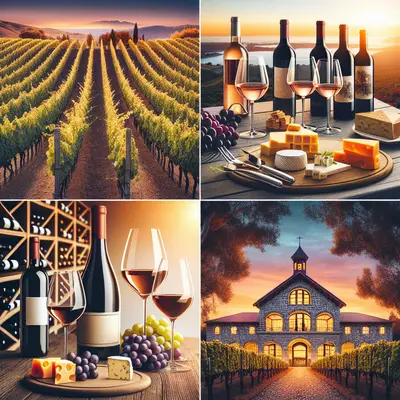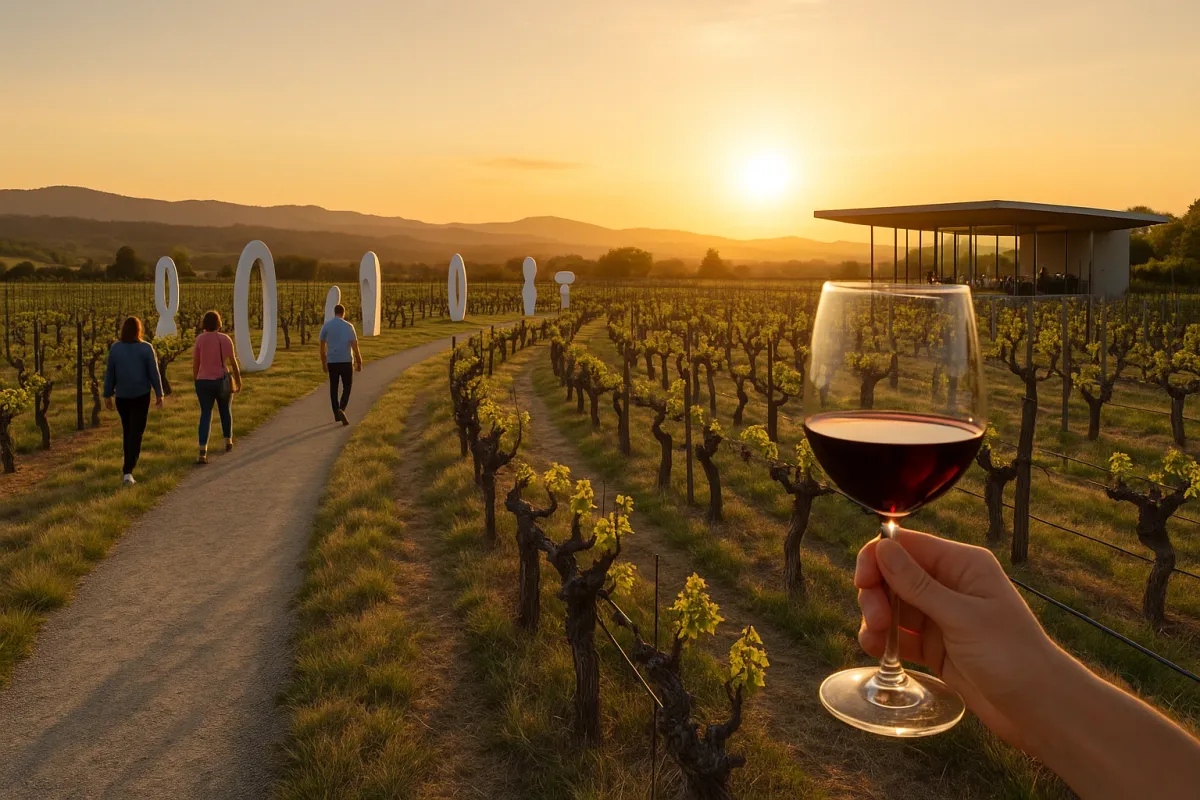
There is a quiet but unmistakable shift happening in the world’s most discerning wine regions: vineyards are no longer just farming landscapes, they are becoming open-air galleries. As global interest in monumental outdoor art surges—reflected in today’s viral features on “unbelievable” sculptures around the world—wineries from Napa to Tuscany and Margaret River are responding with experiences that blend terroir, architecture, and contemporary sculpture into a single, curated journey.
For travelers who follow both art and wine, this isn’t a passing aesthetic trend; it’s the emergence of a new kind of pilgrimage. Think of it as the sculpture park, reimagined through the lens of grand cru terroir and food‑pairing philosophy. Below, we explore five insider dimensions of this movement that serious wine enthusiasts—and design‑minded travelers—will want on their radar right now.
The Vineyard as Open-Air Gallery, Not Just a Backdrop
The global fascination with large‑scale outdoor sculptures—highlighted in today’s features on mind‑bending public art installations—is reshaping how leading estates conceive their landscapes. Instead of treating artworks as decorative afterthoughts, top properties are commissioning site-specific pieces that echo the rhythm of the vines and the contours of the land.
In Bordeaux and Champagne, for example, you’ll find estates where sculptures are deliberately positioned along contour lines, framing vineyard rows and sightlines toward historic châteaux. In New Zealand’s Hawke’s Bay and Australia’s Margaret River, wineries are collaborating with sculptors whose works withstand wind, salt air, and intense sun, becoming permanent markers of microclimate as much as aesthetic signatures. The best tours now feel choreographed: you don’t simply “see” a sculpture and then “taste” a wine—you move through a sequence of vistas where art, light, and aroma unfold together. For guests, the effect is almost cinematic: each bend in the path is a new frame, each glass a new chapter.
Pairing Sculptures with Single Vineyards: A New Lexicon of Place
As viral galleries of extraordinary sculptures underscore public curiosity about how art interacts with its surroundings, elite wineries are taking this one step further by pairing specific works with specific vineyard parcels. Imagine a stainless‑steel installation placed at the crest of a limestone slope, reflecting the chalky glare of afternoon sun—the very light that defines the minerality of the estate’s flagship Chardonnay.
In Piedmont and the Douro, some forward‑thinking producers are designing tours where each sculpture marks a transition in soil type or exposure. A rust-patinated steel piece might stand sentinel over iron‑rich clay, while a pale stone installation anchors a high‑altitude parcel dedicated to Nebbiolo or Touriga Nacional. Tastings are conducted in situ: you stand beside the artwork, glass in hand, as your guide invites you to note how the landscape’s geometry, wind corridor, and reflected light from the sculpture itself subtly influence your sensory perception of the wine. For serious enthusiasts, it’s terroir education elevated to an almost architectural discipline.
Architectural Lines, Sculptural Forms, and the Taste of Light
Today’s fascination with gravity‑defying sculptures—those that appear to float, bend, or vanish depending on your point of view—echoes a broader design language in contemporary winery architecture. Cellars by Foster + Partners, Renzo Piano, and other marquee architects are already widely celebrated; what’s changing now is the way estates use sculpture to bridge the architecture outside with the atmosphere inside the glass.
On cutting‑edge tours in regions like Rioja, Stellenbosch, and California’s Sonoma Coast, visitors begin in a sculpture courtyard where mirrored, perforated, or lattice‑like structures modulate light and temperature. You then progress into barrel halls where that same geometry is echoed in racking systems, ceiling vaults, or even the pattern of tasting counters. The interplay of light and shade is not merely theatrical: cooler, filtered light keeps tasting temperatures stable; angled sightlines direct the eye toward vineyards that frame the story of each cuvée. The result is an almost synesthetic experience: the angularity of a corten‑steel piece outside may prime you to recognize the linearity and tension in a high‑acid Riesling, while a sinuous marble form resonates with the plush texture of a barrel‑fermented Viognier or a finely grained Pinot Noir.
Slow Travel, Sculptural Trails, and the New Luxury of Time
As more travelers turn away from rushed itineraries and toward immersive, single‑destination escapes, sculptural wine trails are emerging as the perfect structure for slow, contemplative travel. The same appetite that drives online fascination with far‑flung, “hard‑to-believe” sculptures is driving on‑the‑ground demand for experiences that unfold gradually, over hours, not minutes.
Leading estates in regions like the Willamette Valley, Provence, and coastal Chile are designing 2–3 hour walking circuits that weave together art, viticulture, and gastronomy. You might begin with a cellar‑door briefing and a first pour, then set off along a marked path that loops past half a dozen installations, each paired with a small pour or a thoughtfully chosen bite—finely sliced jamón with a saline Albariño, or a local goat cheese with a textured, lees‑aged white. Benches and viewing platforms are discreetly placed for moments of complete stillness: just you, the artwork, the scent of wild herbs, and the wine. The luxury here isn’t about opulence; it’s about the rarity of unstructured time in an exquisitely structured environment.
Commissioned Works and Limited Releases: Collecting Art and Wine in Parallel
The crescendo of global interest in spectacular sculpture has also opened a new frontier for collectors who straddle both art and wine. At the highest level, estates are commissioning seasonal or vintage‑specific works tied to limited bottlings, creating a parallel market where serious guests can follow an artist’s evolution alongside a winery’s.
Some European and Californian properties now introduce a new sculpture every few years, each dedicated to a single parcel or experimental cuvée. The artwork might be cast from materials sourced on the property—stone from an old terrace wall, reclaimed staves from retired barrels, or iron unearthed during vineyard replanting. The corresponding wine is bottled in extremely small quantities, sometimes with labels co‑designed by the artist. Premium tours offer early access: a private viewing with the sculptor or estate architect, followed by a comparative tasting of library vintages from previous “art series” releases. For devotees of both disciplines, this converges into a deeply satisfying form of connoisseurship: you are no longer just cellaring bottles or acquiring pieces, but curating an evolving dialogue between an artist’s language and a vineyard’s voice.
Conclusion
As monumental outdoor sculptures capture the world’s imagination across today’s feeds and front pages, the most visionary wine estates are quietly translating that fascination into something more enduring: landscapes where art, architecture, and terroir are inseparable. For the traveler who seeks more than a standard tasting flight, sculpture‑driven wine tours offer an experience that is both profoundly contemporary and deeply rooted in place.
In this new era, the most memorable glass of wine won’t be poured across a crowded tasting bar. It will be savored slowly, in the shadow of a sculpture that could exist nowhere else on earth, in the precise light, wind, and silence that shaped the vines in your glass.
Key Takeaway
The most important thing to remember from this article is that this information can change how you think about Wine Tours.