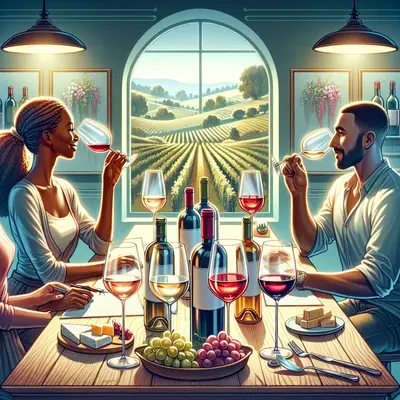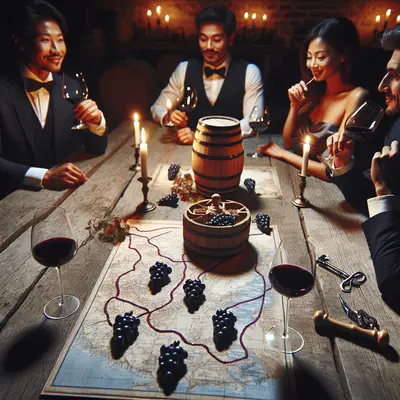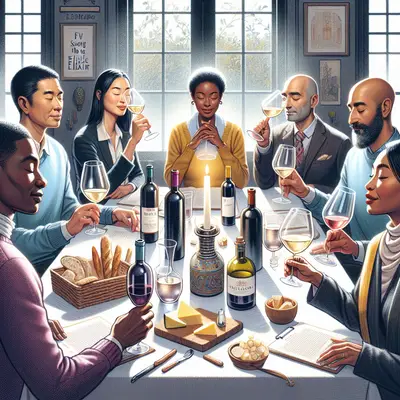
There is a moment, just before the first sip, when time narrows to a single, expectant breath. For discerning travelers and serious wine enthusiasts, that instant is where the true art of tasting begins—not in showy swirls or rehearsed descriptors, but in an intimate dialogue between wine, place, and memory. At Wine Tour Adventures, we curate experiences for those who are less interested in spectacle and more attuned to nuance, precision, and quiet excellence. The following five insights are distilled from the world’s most thoughtful tasting rooms, seasoned sommeliers, and exacting collectors—shared for those who seek something more than merely “liking” a wine.
Insight 1: The Architecture of Temperature
Temperature is not a simple setting on a fridge; it is a structural element of the wine itself. Serve a white Burgundy too cold and its limestone tension and layered texture retreat into austerity; serve it too warm and it feels languid, almost blunted. The same Pinot Noir can appear elusive at 14°C, expressive at 16°C, and openly generous at 18°C. A refined taster does not accept a single “correct” temperature—rather, they observe how a wine’s personality evolves across a narrow band of degrees.
When traveling, especially on wine tours, notice how different estates choose to present their wines. A winery that pours its top cuvée a shade cooler than expected may be inviting you to discover its finesse and structure before its fruit speaks. In your own tasting ritual, allow great bottles to rise gently toward room temperature in the glass, tasting at intervals. Over the course of ten or fifteen minutes, you are not just drinking; you are observing the wine’s architecture unfold, from tightly folded origami to fully opened tapestry.
Insight 2: Texture as the True Signature
Enthusiasts often pursue aromatics—the rose petal in a Nebbiolo, the cassis in a Left Bank Bordeaux. Yet professionals tend to fall silent when discussing the element that truly separates the memorable from the merely agreeable: texture. On the palate, texture is the way a wine occupies space: its grain, its glide, its weightlessness or density, the precision of its edges. Think of a grand Champagne whose mousse feels like finely woven silk rather than coarse foam, or a Barolo whose tannins feel etched and filigreed rather than sandy or rustic.
As you taste, close your eyes for a moment and momentarily ignore aroma and flavor. Ask instead: Is this wine satin or suede? Chalk or velvet? Does it travel through the center of the tongue like a narrow stream, or does it fan outward, like a cape being unfurled? Texture often reveals terroir and craftsmanship more honestly than fruit aromas, which can be influenced by variety, ripeness, and oak. On a curated wine tour, this sensitivity to texture elevates tastings from “good” to revelatory, enabling you to discern not only house style, but the hand of the winemaker in the subtlest of ways.
Insight 3: Silence as a Tasting Tool
True luxury in a tasting room is not always found in marble counters or dramatic views; often, it lies in the gift of unhurried silence. The most refined wineries understand that after the introduction and technical details, the taster needs a few unspoken minutes with the glass. In that quiet, you can sense the wine without performance—without the pressure to declare flavors or arrive at instant conclusions.
When you visit estates, notice how the most sophisticated hosts calibrate their presence. They offer context, then gently step back, returning only when you have had time to contemplate. Emulate this in your own practice: take a full minute with each wine before speaking. Watch how the nose shifts as the wine meets oxygen, how the first sip differs from the third. Luxury, in this context, is the permission to reconsider, to change your mind, to discover that a wine you initially found reserved becomes, with a little time and silence, quietly magnetic.
Insight 4: Vintage as Mood, Not Just Year
Collectors often speak of vintages as if they were simple scores—“good,” “great,” or “difficult.” The more nuanced perspective treats vintage as mood: a distinct emotional tone that permeates the wines of a particular year. A cooler, more restrained harvest can yield wines that feel like twilight—silvery, taut, introspective—while a warm, generous vintage can feel like late afternoon sun, expansive and golden. Both can be exquisite; they simply express different temperaments.
As you deepen your tasting journey, move beyond the reflex of automatically preferring “great” vintages. Seek contrast. Taste a structured, age-worthy year alongside a subtler, earlier-drinking one from the same producer. When visiting wine regions, pay attention to how local winemakers describe each vintage—not just in terms of weather, but in terms of personality. Over time, you will begin to sense that vintage is not simply chronology; it is emotional color, shaping how a wine accompanies specific moments in your life—celebrations, quiet evenings, or reflective conversations.
Insight 5: The Curated Flight as a Storyline
Many tasting rooms present flights as a sequence—from lighter to fuller-bodied, young to old, entry-level to flagship. Discerning enthusiasts know that the most compelling flights are narratives, not ladders. A thoughtfully constructed tasting can trace altitude, soil composition, exposure to wind or sea, or the evolution of a single parcel over multiple vintages. This storytelling is where wine tasting becomes an intellectual and aesthetic experience, rather than mere consumption.
On your next vineyard visit, instead of simply accepting the “standard” flight, consider asking for a comparative or thematic one: a series of single-vineyard expressions, or multiple vintages of the same cuvée. Notice how your perception deepens when context is built into each glass. In your own cellar, recreate this narrative approach—three Chardonnays from differing latitudes, or Syrah grown on granite versus limestone. The bottles become chapters, the glasses paragraphs, and your impressions the marginalia in a story you will remember long after the last sip.
Conclusion
Refinement in wine tasting is not about speaking fluent jargon or chasing rare labels. It is about cultivating an attentiveness that honors the quiet decisions behind every bottle: when to harvest, how gently to press, which barrels to trust, and when to release. By tuning yourself to temperature’s architecture, texture’s secrets, silence’s clarity, vintage’s mood, and the story hidden in a well-curated flight, you step beyond casual enjoyment into something more deliberate, elegant, and enduring.
At Wine Tour Adventures, our aim is to place you precisely at those moments where everything aligns—the right wine, in the right glass, in the right light, with just enough time and space to notice. Because in the end, the finest luxury in wine is not extravagance; it is the rare privilege of truly paying attention.
Sources
- Wine Tasting: A Professional Handbook – UC Davis (Excerpt) – Foundational academic reference on sensory evaluation and tasting structure
- UC Davis Wine Aroma Wheel – Educational tool from UC Davis that helps organize and understand aromatic profiles in wine
- GuildSomm: Wine Service and Tasting Resources – Professional-level articles on tasting technique, service, and terroir-focused comparisons
- Wine Folly – Serving Temperature Guide – Practical reference on how temperature affects style and perception of different wine types
- Harvard T.H. Chan School of Public Health – Alcohol and Health – Evidence-based overview of alcohol consumption and health considerations for responsible enjoyment
Key Takeaway
The most important thing to remember from this article is that this information can change how you think about Wine Tasting.