There is a tier of wine estates that rarely announces itself with neon accolades or crowded tasting rooms. Their presence is quieter, their influence profound. For the discerning traveler, these premium wineries offer not just great bottles, but a fully realized world of detail: architecture in dialogue with the landscape, viticulture shaped by decades of patient observation, and hospitality so seamless it feels almost invisible.
This is not about “best wineries to visit” or “top bottles to buy.” It is about understanding what genuinely sets premium estates apart—and how to recognize those subtleties when you arrive at the gate.
The Silent Geometry of the Vineyard
At truly premium wineries, the story begins long before the cellar door. Walk the vineyards and you’ll notice an almost architectural order: row orientation calibrated to sun paths, vine spacing adapted to soil vigor, and canopy management that looks artful rather than merely tidy.
Such geometry is not aesthetic coincidence. In Bordeaux and Burgundy, for instance, row direction and density are tailored to maximize phenolic ripeness while preserving freshness, particularly for late-ripening varieties like Cabernet Sauvignon and Pinot Noir. Top estates in Napa and the Mosel employ precise mapping of slope, aspect, and soil texture to decide where each clone is planted, which rootstock supports it, and how aggressively yields should be limited.
For the attentive guest, this “silent geometry” reveals itself in small cues: subtle differences in trellis height between parcels, individually staked vines in wind-exposed sites, or narrow terraces carved into daunting slopes. Premium wineries rarely explain all of this unprompted; they prefer that you ask. The vineyard is their first quiet invitation to a deeper conversation.
Exclusive Insight #1: Study the rows and the slopes. If the estate can explain, with specificity, why each block looks the way it does—and how that translates into a particular cuvée—you are likely in the hands of a serious, terroir-driven producer.
Cellars as Instruments, Not Monuments
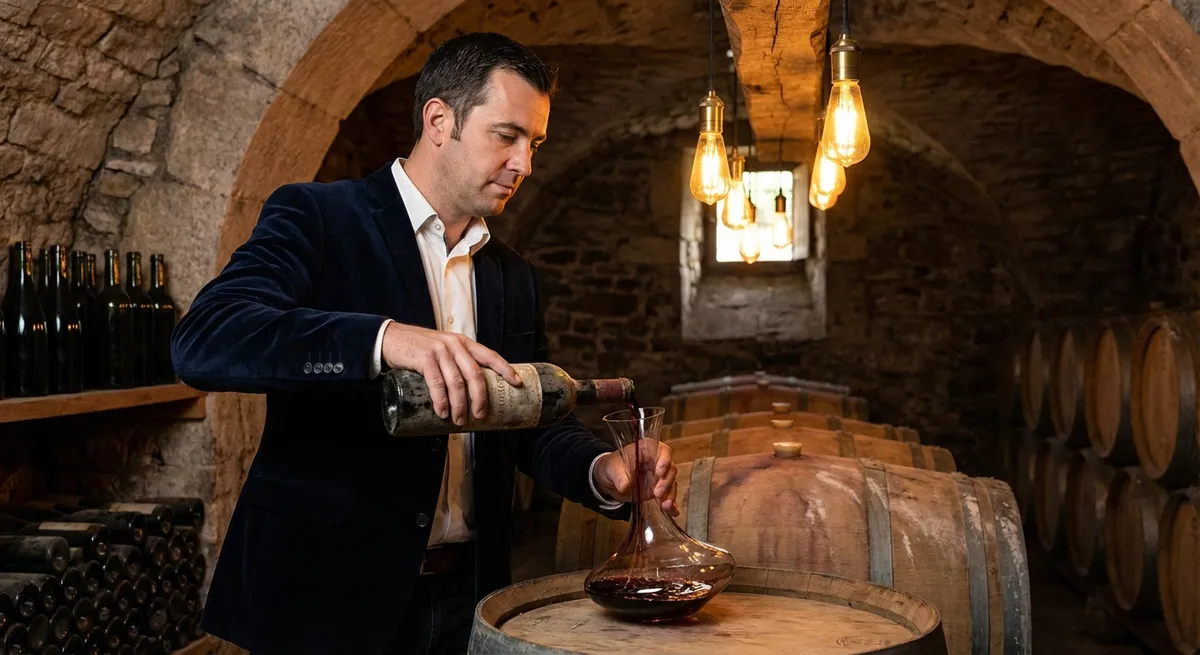
Many wineries build impressive cellars; only a few treat them as precision instruments. In the premium realm, the cellar is not simply a showcase of barrels or glittering tanks—it is a climate, an acoustic, a choreography of movement designed around protecting the integrity of the fruit.
Look for gravity-fed systems where grapes and juice move without harsh pumping, especially at top estates in regions like Bordeaux’s Left Bank or Tuscany’s Brunello di Montalcino zone. Temperature and humidity are not just “controlled”—they are softly regulated with almost monastic constancy, minimizing evaporation and oxidation. Barrel rooms may be dimly lit, with minimal ambient noise, to avoid unnecessary thermal and vibrational stress.
You may notice a multiplicity of fermentation vessels: stainless steel, concrete, large neutral casks, and small barriques, each used for specific parcels or varieties. What appears as complication is, in fact, a toolkit for nuance. The most serious estates can tell you precisely why a certain parcel ferments in tulip-shaped concrete while another rests in large foudre.
Exclusive Insight #2: Ask how choices in vessel, temperature, and oxygen exposure differ by parcel or grape. When the cellar master can draw a clear line from each micro-decision to the final texture, aroma, or age-worthiness of the wine, you’re experiencing winemaking at a genuinely premium level.
The Art of Restraint in Hospitality
Premium wineries rarely equate luxury with extravagance. Instead, they excel at a more sophisticated art: restraint. Tastings unfold with an understated rhythm; there is no rush to pour, no pressure to purchase, no hard sell on “club memberships.” Instead, there is space—space for conversation, reflection, and genuine curiosity.
You may be welcomed with a simple, impeccably chosen glass as an “overture”—perhaps a current-release white or sparkling wine that sets the tone. The host will often tailor the experience without announcing it as such: adjusting the pace if they sense your interest in viticulture, deepening the conversation if you show familiarity with vintages or appellations, simplifying language if you prefer a more relaxed, sensory focus.
In the most refined settings, hospitality becomes almost anticipatory. A small spittoon appears before you ask. A carafe of water materializes the moment you glance at your glass. If the day is warm, tastings might be shaded and breezy; in winter, by a quiet fire. Nothing feels staged, yet everything is considered.
Exclusive Insight #3: Observe what is not pushed. When a winery trusts its wines and story enough to let silence play a role—no aggressive upselling, no obligatory “favorites”—you’re likely in a place that values long-term relationships over transactional visits.
Vintage as Narrative, Not Excuse
At the highest level, vintage is not a marketing angle nor a convenient alibi when wines are less generous. It is a narrative thread that serious estates follow over decades. Premium wineries will speak openly and precisely about challenging years, often with a certain pride: the frost year that forced ruthless selection, the heatwave vintage that led them to experiment with different canopy shading, the rain-soaked harvest that demanded meticulous sorting.
You will notice that the conversation shifts from “good vintage, bad vintage” towards “different expressions.” A cooler year may yield wines of greater tension and aromatic complexity, while warmer vintages show more overt generosity and plush tannins. Both are celebrated when the underlying viticulture and winemaking are strong.
In regions like Burgundy, Rioja, or the Rhône, such nuance is essential. The estates you want to return to are the ones that encourage you to taste across vintages, to compare the radiant charm of a warmer year with the taut precision of a cooler one, and to understand that true greatness lies in consistency of philosophy, not sameness of profile.
Exclusive Insight #4: Ask to taste contrasting vintages side by side. If the estate welcomes the comparison—and can articulate how their decisions respond to each year’s conditions—you are witnessing an approach grounded in long-view excellence rather than short-term fashion.
The Quiet Signature in the Glass
Premium wineries almost always possess a recognizable “voice” in their wines—yet this signature is not loud or simplistic. It appears as a quiet through-line: a particular texture on the mid-palate, a consistent sense of balance, an aromatic family that reappears across varieties and vintages without feeling repetitive.
This signature is rarely the result of a marketing directive. It is the accumulated outcome of land, people, and time: the soils and exposures, the chosen clones, the pruning and picking decisions, the fermentation tempos, the élevage. Over years, these decisions converge into something remarkably consistent yet never static.
When you taste through a premium estate’s range, from entry-level bottling to flagship cuvées, you should feel a family resemblance: perhaps a shared core of minerality, a tension between ripeness and freshness, or a finish that lingers with particular grace. Even the simplest wine in the lineup will feel intentionally crafted, never an afterthought.
Exclusive Insight #5: Taste from the “humblest” wine upward. At exceptional wineries, the foundational cuvée is not where corners are cut—it is where the estate’s philosophy is most clearly distilled. If their most accessible bottle is balanced, precise, and characterful, the top wines are likely to be genuinely worth your attention (and cellar space).
Conclusion
To move through the world of premium wineries is to become increasingly attuned to fine-grained distinctions: the slope of a row, the hush of a barrel hall, the candor with which a winemaker speaks about a difficult vintage, the way even a “simple” wine carries an unmistakable house style.
The rewards for such attentiveness are profound. Your tastings cease to be a checklist of famous labels and become, instead, a series of conversations—between land and winemaker, between vintage and technique, and, ultimately, between the wine and you. The next time you visit a renowned estate, look beyond the postcard view and listen closely to those whispered luxuries. That is where the true premium experience resides.
Sources
- Napa Valley Vintners – Napa Valley Terroir - Overview of how geology, climate, and topography influence premium winegrowing
- Bordeaux Wine Council (CIVB) – Vineyard and Winemaking Practices - Insight into meticulous viticulture and cellar decisions at top Bordeaux estates
- Institute of Masters of Wine – The Concept of Terroir - Scholarly discussion of terroir and its role in defining wine identity
- UC Davis Department of Viticulture & Enology - Technical resources on cellar design, fermentation vessels, and winemaking techniques
- Decanter – Understanding Wine Vintages - Explanation of how vintage conditions shape style and quality across regions
Key Takeaway
The most important thing to remember from this article is that this information can change how you think about Premium Wineries.