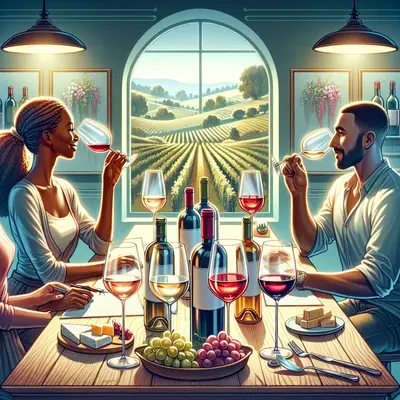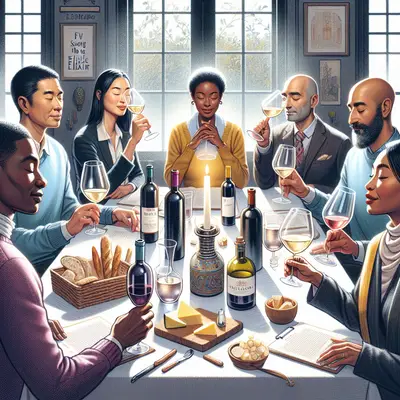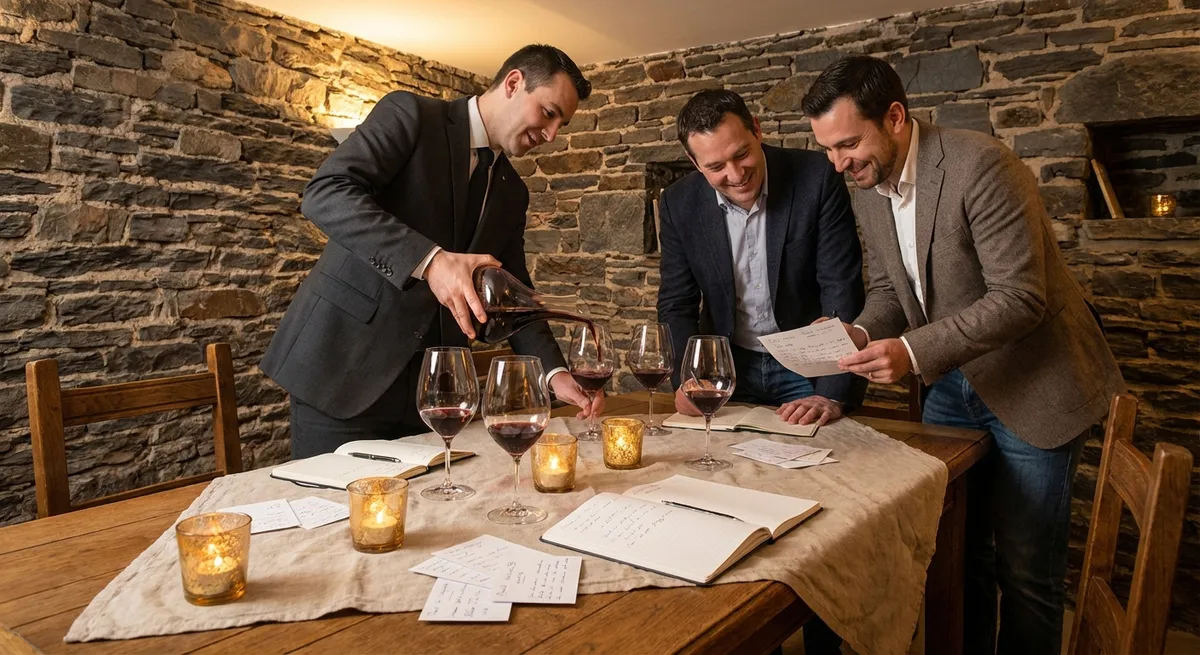
There is a moment, just before the first sip, when the room seems to quiet. The glass tilts, the wine moves, and perception begins its slow recalibration. For the discerning wine traveler, tasting is no longer a simple pleasure—it is a cultivated ritual, an intimate dialogue between place, time, and craft. This is where wine ceases to be a beverage and becomes, instead, an experience that can be shaped, deepened, and refined.
The Architecture of the Glass: How Shape Rewrites Flavor
The glass is not a neutral vessel; it is an instrument that edits what you perceive. The curvature of the bowl, the diameter of the rim, and the height of the glass all choreograph how aroma rises, how alcohol expresses itself, and where the wine first touches your palate.
A narrower bowl concentrates volatile aromatics, ideal for delicate whites and Pinot Noir, while broader bowls allow more oxygen contact, easing open dense, structured reds. A tulip-shaped rim guides wine to a more precise area of the tongue, amplifying either fruit, acidity, or texture depending on the wine style. Even the thickness of the glass matters: fine crystal with a thin lip creates a near-invisible boundary between wine and mouth, making textures feel more seamless and precise.
For the serious enthusiast, “one good glass” is not quite enough. Instead, consider a small, curated set—perhaps a universal high-quality stem, a larger bowl for powerful reds, and a more vertical glass for high-acid whites and sparkling wines. Subtle? Yes. But once noticed, the difference becomes difficult to ignore.
The Prelude to the First Sip: Conditioning Your Senses
The moments leading up to tasting have an outsized impact on what you actually perceive. Your senses, like the best cellars, benefit from careful conditioning. The environment—lighting, temperature, scent, and even sound—either elevates or interferes with your ability to interpret the wine.
Harsh overhead lighting can flatten visual nuance, while strong ambient scents—from candles, perfumes, or food—compete with the wine’s own aromatic profile. A quieter soundscape encourages you to linger in the glass longer, noticing transitions rather than just primary impressions. Even your own palate requires consideration: tasting shortly after coffee, mint, or spicy food can distort flavor and structure, making wines seem unusually bitter, thin, or aggressive.
Before an important tasting, create a brief prelude ritual. Rinse with neutral water, avoid strong flavors for at least 30 minutes, and allow your senses a period of stillness. Step into the tasting not as a casual observer, but as someone deliberately tuning an instrument that is about to receive complex information.
Time in the Glass: Reading a Wine’s Evolution
The most revealing moments in a wine’s life sometimes occur not in the first sip, but in the fifth—or the fortieth minute. Watching a wine evolve in the glass is one of the most exclusive forms of pleasure available to a patient taster, especially during visits to top estates.
Initially, the wine may appear tight, linear, or reserved. As oxygen works its way through the liquid, aromatics widen; the edges of tannin may soften; fruit can shift from fresh to compote, from citrus to stone, from floral to spice. Tracking these changes is akin to watching a time-lapse of the wine’s maturity compressed into a single sitting.
Train yourself to taste in intervals rather than in a single moment: immediately on pouring, after five minutes, fifteen minutes, and near the end of the glass. Note not just what appears, but what recedes—perhaps a dominant oak signature integrates, or a shy floral note emerges with air. This temporal dimension of tasting offers a deeper understanding of why certain wines age gracefully and others are meant for youth, and it lends extraordinary richness to estate visits where multiple vintages are presented.
Texture as a Language: Beyond Fruit, Oak, and Aromas
Once you move past the vocabulary of fruit, flowers, and spice, the most sophisticated conversations about wine often revolve around texture. Texture is where terroir, elevation, climate, and winemaking choices often reveal themselves with the greatest honesty.
Focus on the grain of the tannins in red wines: are they powdery, chalky, velvet-like, or more angular and firm? Notice how acidity behaves—does it feel like a single high note, or a lengthening, almost architectural line carrying flavor across the palate? In white wines, pay attention to whether the wine seems to glide, grip, or hum on the tongue, and whether there is a sensation of salinity or minerality that lingers after the flavors fade.
Texture is also where many of the world’s great food-and-wine pairings are forged. A wine with fine, persistent acidity can cleanse the palate between bites of rich, creamy dishes; a wine with a subtle phenolic grip in a white (common in certain skin-contact or high-altitude wines) can stand confidently beside dishes usually reserved for reds. For the refined enthusiast, learning to “read” texture is like learning a new language that is spoken softly but carries immense meaning.
The Story in the Silence: Listening to the Producer
In the most prestigious cellars, the true luxury is not merely the label in the glass, but the conversation in the room. Winemakers and estate owners often reveal more in what they do not overtly emphasize than in what they actively promote. The discerning taster listens not only to the rehearsed narrative of terroir and tradition, but also to the quiet admissions of experimentation, constraint, and philosophy.
Pay attention to how they speak about challenging vintages: do they gloss over them, or do they lean into the complexity of difficult years? Notice whether the conversation turns to soil composition, canopy management, and harvest decisions, or remains on surface-level descriptors. When a producer becomes animated discussing a certain plot, clone, or elevation, you are being given a clue about the true heart of the estate’s identity.
During visits, ask questions that invite depth: how did their picking dates change over the past decade? How have they adjusted to shifting climate patterns? Where do they see the most promise in their vineyards for the next generation? The answers, especially the hesitations, will inform how you interpret the wine in your glass—adding layers of context that can be tasted, not just remembered.
Five Exclusive Insights for the Advanced Enthusiast
For those already steeped in the basics, these refined insights elevate tasting from well-informed to truly connoisseur-level:
Micro-Temperature Tuning
Instead of serving one standard temperature for “red” or “white,” experiment in narrow bands. A structured red at 16°C versus 18°C can feel like an entirely different wine; a top white Burgundy or Riesling often reveals its precision best just a touch cooler than typical serving norms, then broadens as it warms in the glass.
Vintage Across Regions, Not Just Producers
Many enthusiasts follow vintages by estate, but true depth comes from understanding how the same vintage behaved across multiple regions. Tasting, for example, a cooler vintage in both Bordeaux and Napa, or across Champagne and English sparkling wine, refines your sense of climate signatures far beyond any single label.
Silent Flights: Tasting Without Knowing the Grape
Occasionally taste blind where even the grape variety is hidden. This removes the safety of expectation and forces you to read structure, acidity, alcohol, and aromatics more objectively. It is an invaluable way to reset assumptions about what certain regions or styles can deliver.
Decanting as Scalpel, Not Habit
Decanting is not a universal good; it is an intervention. Some wines can gain elegance and openness, while others can lose their most delicate top notes if overexposed. Approach decanting as a precise tool—ideal for young, tightly wound reds or wines with reductive notes, but used sparingly for very old bottles or fragile, aromatic varieties.
Revisiting a Bottle Over Days
When possible, follow a bottle over 24–72 hours, preserving it carefully between pours. Watching how a serious wine holds, collapses, or transforms over several days offers remarkable insight into its structural integrity and age-worthiness—information that even a lengthy tasting in one sitting cannot fully provide.
Conclusion
At its most elevated, wine tasting is not a performance of knowledge, but a practice of attentiveness. Glass shape, environment, time in the glass, texture, and the quiet narratives of the people behind the bottle all converge to create an experience that is both sensorial and intellectual. For the discerning enthusiast traveling through the world’s great wine regions, refinement lies less in accumulating more labels and more in tasting with heightened clarity and intention.
In these whispered nuances—where the difference between good and extraordinary is often measured in degrees, minutes, and millimeters—wine reveals its most captivating self. And in learning to perceive those distinctions, you are not simply drinking better; you are participating more fully in the art form itself.
Sources
- University of California, Davis – Wine Flavor 101 – Overview of how aroma, taste, and mouthfeel contribute to wine perception from a leading oenology program
- Harvard T.H. Chan School of Public Health – Alcohol: Balancing Risks and Benefits – Evidence-based discussion of alcohol consumption, health, and moderation
- Riedel – The Effect of Shape on Wine’s Taste – Glassmaker’s detailed explanation of how bowl and rim design influence flavor and aroma
- Wine & Spirit Education Trust (WSET) – Systematic Approach to Tasting Wine – Professional tasting framework that underpins structured evaluation of wine
- Wine Institute – Wine Serving and Storage Tips – Practical guidance on temperature, storage, and handling from an industry organization
Key Takeaway
The most important thing to remember from this article is that this information can change how you think about Wine Tasting.