In the hush of a well-curated tasting room or the cool dimness of a barrel cave, wine reveals itself in layers—never all at once, never in haste. For the devoted enthusiast, tasting becomes less a pastime and more a finely tuned practice: a quiet dialogue between glass, place, and time. This is where refinement lies—not in spectacle or showmanship, but in the subtle discipline of paying exquisite attention.
Below, we explore an elevated approach to wine tasting through five exclusive insights designed for those who wish to move beyond the basics and into a more nuanced, almost private understanding of the glass in hand.
The Quiet Study of Texture: Reading Wine by Feel, Not Just Flavor
Most discussions around wine fixate on flavor descriptors—cherry, cedar, violet, graphite—but the truly attuned taster begins with texture. Texture is where a wine whispers its origin, its climate, and its craftsmanship.
Observe how the wine moves in the mouth: Is it linear and taut, gliding along the tongue with a fine, almost architectural precision? Or is it broad and enveloping, a silk curtain of flavor that seems to drape across the palate? Consider the grain of the tannins—do they feel like powder, suede, or finely woven linen? This vocabulary of touch often communicates more than any fruit descriptor can.
High-altitude reds, for instance, may present a cool, vertical structure, with tannins that feel etched rather than plush. Whites from maritime climates can have a saline, almost tactile freshness that clings delicately to the sides of the tongue. By foregrounding texture, you train your palate to identify craftsmanship: the choice of harvest date, the finesse of extraction, the sensitivity of oak integration. Over time, these tactile impressions become a personal library of “mouthfeel memories” you can call upon from glass to glass.
Time in the Glass: Allowing a Wine’s True Character to Emerge
Impatience is the enemy of serious tasting. Truly expressive wines often refuse to show their full character in the first few minutes; they require time—both in the bottle and in the glass—to unfold.
When presented with a tasting flight, resist the urge to rush from wine to wine in a linear sequence. Instead, move back and forth slowly, revisiting each pour. Note how oxygen transforms the aromas: a closed, reticent nose at first may, ten or fifteen minutes later, bloom into layers of spice, earth, or floral lift. This evolution is not a trivial curiosity; it is central to understanding a wine’s inner architecture.
Pay attention, too, to the wine’s “arc” over the course of the tasting. Does it grow more harmonious and expressive with time, suggesting both vitality and the potential to age gracefully? Or does it fall apart—fruit fading, structure becoming disjointed—revealing that it is best enjoyed sooner rather than later? In a quiet tasting room, with a well-paced schedule, this slow observation becomes a kind of meditative practice, one that yields deeper insight than any quick evaluation could offer.
Scent as Story: Training a Personal Aroma Lexicon
Aromas in wine are not random; they are narrative threads linking grape variety, terroir, and winemaking choices. For the advanced taster, building a refined aroma lexicon is less about memorizing lists and more about deliberately cultivating scent memories in daily life.
Beyond the usual “blackberry” and “citrus,” seek specificity. Is that citrus more reminiscent of Amalfi lemon, blood orange, or yuzu? Does the herbal note evoke fresh tarragon, dried thyme, or crushed bay leaf? Forest floor can mean damp cedar needles or sun-warmed underbrush after rain. The more precise you become, the more clearly wines begin to “speak.”
Outside the tasting room, this refinement can be quietly intentional: inhale deeply when grinding spices; open a jar of dried tea leaves and pause to classify the scents; walk through a garden after rain and name individual impressions—wet stone, bruised rose petals, sun-hot tomato vine. When you later encounter a glass of wine, these experiences form an internal atlas, allowing you to map aromas with a confidence that feels both intuitive and deeply grounded.
Context Pairing: Matching Wines to Moments, Not Just to Dishes
Food pairing is only part of the equation. The most memorable wine experiences arise when the wine is in harmony not only with the cuisine, but also with the moment, the setting, and the emotional tone of the occasion.
A structured, contemplative red—Bordeaux, Barolo, a profound Cabernet Franc—truly flourishes in quiet, lingering evenings where conversation can spiral and deepen. A luminous, mineral-driven white sings at the edge of the sea or on a sunlit terrace, reinforcing the brightness of the environment. Delicate sparkling wines can elevate transitional moments: the first glass as guests arrive, the pause between courses, the quiet close of an afternoon tasting.
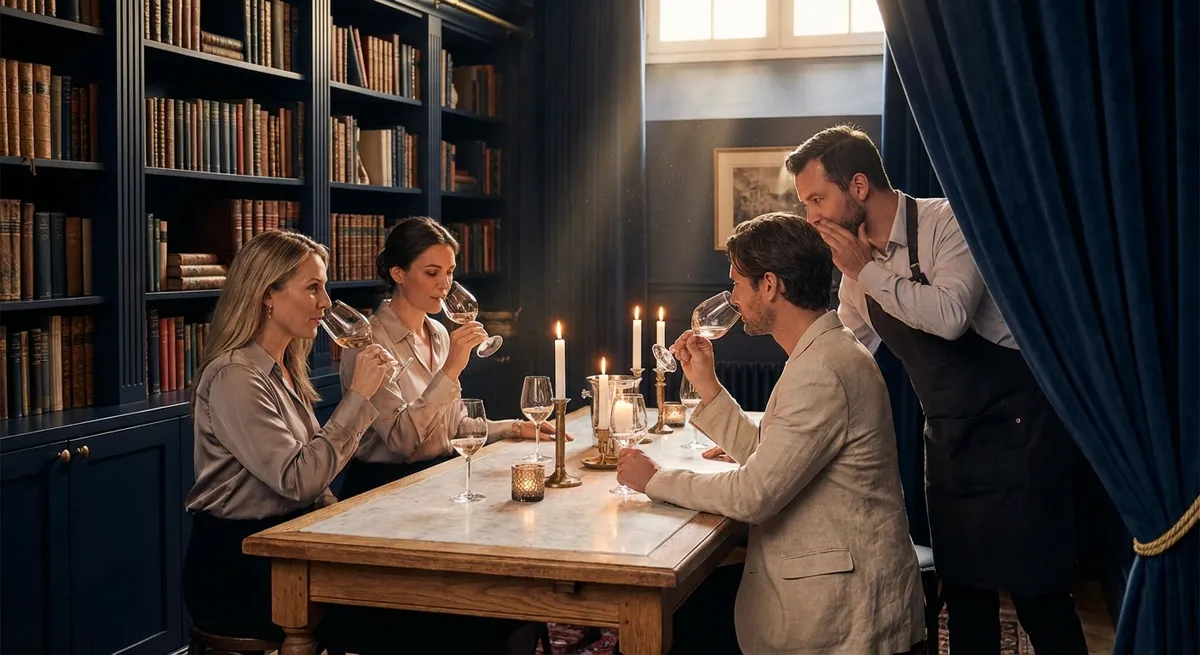
On a thoughtfully curated wine tour, this might mean tasting a racy, high-acid white while overlooking the cool slopes that shaped its character, or savoring an aged, contemplative red in the hush of a library-like tasting salon. By consciously pairing the wine to the tempo of the moment—energetic, reflective, celebratory, or intimate—you move beyond technical appreciation into a more curated form of pleasure, where every glass feels precisely placed.
The Discipline of Discretion: Knowing When Not to Speak
In premium tasting environments, refinement often reveals itself in what is not said. Amidst a culture that encourages rapid opinion and instant scoring, the advanced taster understands the value of withholding judgment—at least initially.
Begin a tasting in silence. Smell, taste, and revisit the wine before offering commentary. Notice your first impulse—pleasure, surprise, resistance—but resist the urge to immediately categorize the wine as “good” or “not my style.” Instead, ask quieter questions: What is the wine attempting to express? How does its structure support or challenge that intention? What qualities—balance, length, complexity, energy—emerge as you sit with it?
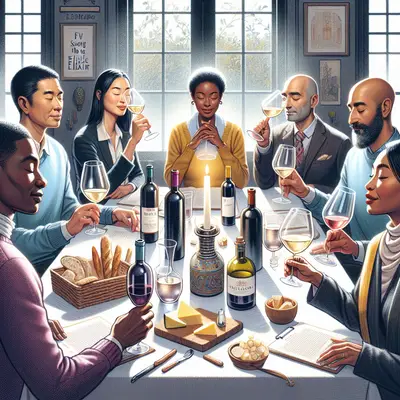
This discretion extends to group tastings as well. Hold back from dominating the conversation with descriptors; give others space to form their own impressions. The most sophisticated tasters know that tasting is not a performance. It is a discipline of attention, supported by gracious listening and the willingness to reconsider one’s first impressions as the wine reveals more of itself.
In doing so, you cultivate not only a more nuanced palate, but also a more elegant presence in any tasting room you enter.
Conclusion
Wine tasting, at its highest level, is not about chasing prestige labels or collecting elaborate tasting notes. It is about cultivating a precise, quiet sensitivity: to texture, to time, to scent, to context, and to the unspoken courtesies that elevate a shared experience.
For travelers seeking more than a checklist of famous estates, this approach transforms a wine tour into something far more considered—a series of restrained but unforgettable encounters with places, people, and bottles that reward stillness and curiosity. In that space, every pour becomes more than a taste; it becomes a moment of finely tuned discovery.
Sources
- [UC Davis Department of Viticulture and Enology](https://wineserver.ucdavis.edu/) - Research-based insights on wine composition, tasting, and sensory evaluation from a leading academic institution
- [Wine & Spirit Education Trust (WSET) – Systematic Approach to Tasting](https://www.wsetglobal.com/students/systematic-approach-to-tasting-sat/) - Professional framework for analyzing wine structure, aroma, and flavor
- [Decanter – How to Taste Wine like a Professional](https://www.decanter.com/learn/how-to-taste-wine-like-a-professional-90355/) - Practical guidance on building tasting skills and refining palate awareness
- [Harvard T.H. Chan School of Public Health – The Nutrition Source: Alcohol](https://www.hsph.harvard.edu/nutritionsource/healthy-drinks/alcohol/) - Evidence-based overview on alcohol consumption, health, and responsible enjoyment
- [GuildSomm – Wine Study Resources](https://www.guildsomm.com/) - In-depth educational articles for advanced wine students and professionals (registration required for full access)
Key Takeaway
The most important thing to remember from this article is that this information can change how you think about Wine Tasting.