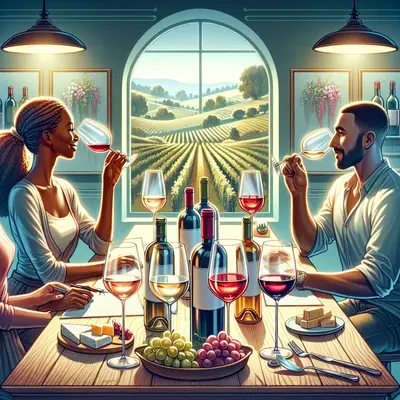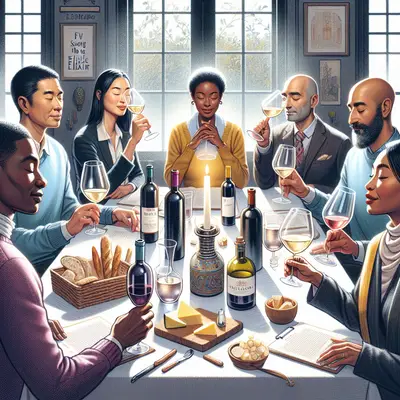
Wine tasting, at its most refined, is less a sequence of sips and more a choreography of attention. Beyond the swirl and sniff lies a quiet world of nuance—tiny adjustments in lighting, glassware, cadence, and mindset that separate a pleasant tasting from a truly transporting experience. For those who seek more than just “notes of blackberry and oak,” the glass becomes a lens through which time, place, and craftsmanship come sharply into focus.
This is wine tasting as a discreet art form: precise, unhurried, and exquisitely intentional.
Curating the Atmosphere: The Silent Architect of Flavor
Before the first cork is drawn, the room has already begun to shape the wine. Light, scent, sound, and temperature all whisper to the senses, altering perception long before the wine touches your lips.
Soft, indirect lighting allows color to be seen clearly without harsh glare. Natural daylight is ideal, but cool-toned artificial light can perform beautifully when carefully balanced. Strong ambient scents—candles, perfume, food—compete with a wine’s aromatic profile, blurring its subtler edges. The most refined tastings unfold in a quietly neutral aromatic space: linens without fabric softener, glassware polished with scent-free cloths, a room that smells of nothing in particular.
Sound matters more than many enthusiasts realize. Low-level conversation and soft background music can feel inviting, but excessive noise compresses attention and shortens the palate’s patience. A thoughtfully moderated soundscape lets each pour command the focus it deserves, so the wine’s delicate transitions aren’t drowned out by its surroundings.
Temperature, both in the room and in the glass, completes this invisible frame. A slightly cool environment keeps wines fresh in the glass and tasters alert and comfortable. When the setting is deliberately composed, every subtle aroma and textural shift emerges more clearly—like adjusting the lighting for a masterpiece on the wall.
The Architecture of the Glass: Precision in Every Curve
Fine glassware is often admired for its beauty, but its true significance lies in engineering rather than ornament. The best glasses are instruments rather than accessories: tuned to direct aroma, channel texture, and moderate the wine’s entry onto the palate.
A tall bowl concentrates volatile aromatics, allowing delicate floral and mineral notes to gather and rise. The narrowest point (the rim) behaves like a lens, focusing the aromatic column toward the nose. For structured reds, a wider bowl invites air, encouraging tannins to soften and the bouquet to unfold in slow, generous layers.
The rim thickness is another quiet luxury. Ultra-fine rims offer almost no perceptible barrier between lip and liquid, making the first contact feel seamless. This enhances the sense of “purity” and elegance, particularly in high-acid whites and sparkling wines where precision is part of the pleasure.
Stem length and balance subtly influence behavior. A well-weighted stem encourages you to hold the glass correctly—by the stem rather than the bowl—maintaining the wine’s temperature and keeping the bowl free of fingerprints that obscure its color. Over the course of a tasting, this ergonomic elegance supports consistency: each pour is presented to your senses under almost identical conditions.
For the enthusiast, experimenting with glass shapes using the same wine becomes an illuminating study. A single bottle can feel like two different wines when poured into distinctly different bowls—a reminder that what you taste is not just the wine itself, but its collaboration with form.
The Cadence of Tasting: Pacing the Palate Like a Maestro
Even the most remarkable wines can blur into one another if tasted without rhythm. A refined tasting unfolds not as a rush of impressions, but as a carefully paced sequence—each wine given time to fully articulate itself before the next arrives.
Starting with lower-alcohol, higher-acid wines gently awakens the palate. Crisp whites, elegant sparklings, and lighter reds lay the foundation, sharpening perception without saturating it. Rich, tannic reds or dessert wines are best reserved for later, when your senses are primed and your attention fully attuned.
The space between wines is as important as the wines themselves. A short pause—water, a quietly neutral bite, a few unhurried breaths—allows your palate to “clear the stage.” Instead of sprinting through a flight, you move with a deliberate tempo, giving your sensory memory a chance to register and compare.
Returning to a wine after several minutes can be particularly revealing. Oxygen and time coax out hidden facets: a shy floral note, a more expressive texture, a subtle savory edge. Thoughtful pacing grants you access to these secondary chapters, allowing the wine’s evolution in the glass to become part of the experience rather than a missed opportunity.
Over an evening, this sense of cadence transforms tasting into something akin to listening to a well-composed album—each track distinct, but arranged to build toward a quietly powerful whole.
Reading a Wine’s Texture: The Tactile Language Beyond Flavor
Flavor is what we describe most readily; texture is what lingers in memory. Enthusiasts who train themselves to notice the tactile dimension of wine often find their appreciation deepens in unexpected ways.
Acidity presents itself not just as “brightness,” but as a vertical sensation—an almost architectural line that moves from the sides of the tongue to the back of the palate. High-acid wines feel taut, lifted, almost architectural; lower-acid wines can feel rounder, wider, more enveloping.
Tannins speak a different language. Rather than thinking of them simply as “strong” or “soft,” consider their texture: are they powdery, like fine cocoa? Silky, like brushed suede? Firm, like strong black tea? This textural vocabulary reveals how a wine is built—and often, how it might age.
Body, too, is more than “light” or “full.” Some wines move across the palate like a silk scarf: weightless yet present. Others feel like cashmere: plush, gentle, comforting. A few are dense and architectural, demanding slower attention and smaller sips. As you learn to recognize these subtleties, you begin to sense the craftsmanship behind them: decisions in vineyard and cellar transformed into tactile poetry.
Considering texture alongside flavor also refines your sense of pairing. A dish with creamy richness may call less for certain flavors and more for the right structural counterpoint: bright acidity to cut, delicate tannin to frame, a finely weighted body to match.
Insightful Reflection: Capturing the Wine’s Quietest Details
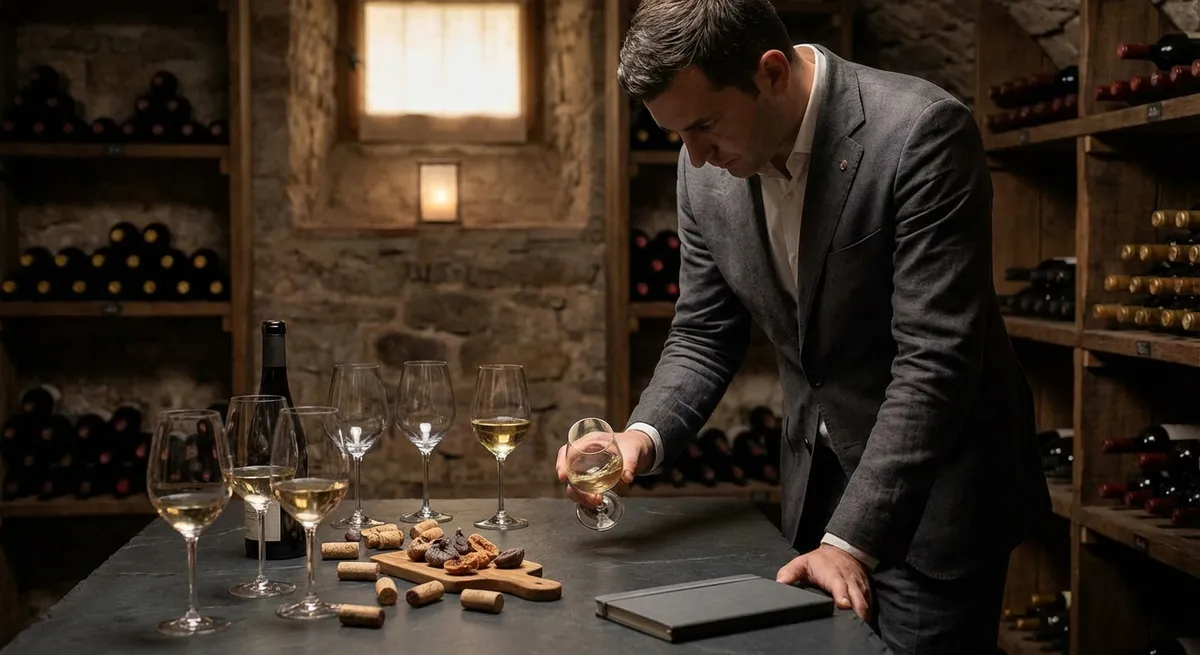
The most exclusive insight is often the simplest: taking a moment to record your impressions with the same care invested in crafting the wine itself. This is less about keeping “tasting notes” in the traditional sense, and more about preserving a private archive of sensory memory.
Instead of listing every identifiable aroma, focus on what is most distinctive: the single detail that would help you recognize this wine again. It may be an impressionistic phrase rather than a conventional descriptor—“cool stone after rainfall,” “dark fruit with a graphite edge,” “citrus framed by fine chalk.”
Noting the wine’s mood can be surprisingly revealing. Some wines feel contemplative, others exuberant, others almost architectural in their precision. These subjective impressions, when revisited later, tell you as much about the wine’s character as any formal tasting grid.
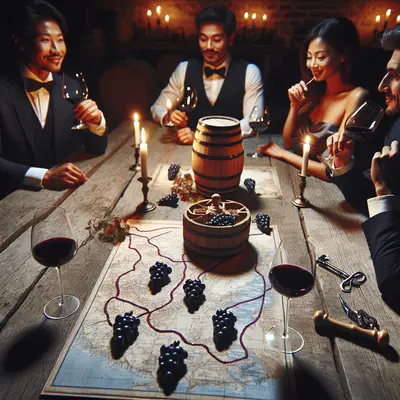
Over time, this quiet practice sharpens your palate. You begin to detect patterns: the tension in wines from certain regions, the textural signatures of particular producers, how specific vintages express themselves. What begins as a refined habit evolves into a deeply personal cartography of taste—a private map that guides future selections, cellar choices, and travel plans.
The true luxury is not just the wine in the glass, but the cultivated attention you bring to it.
Conclusion
At its highest expression, wine tasting is less about performance and more about presence. The most memorable experiences are rarely the loudest or the most ostentatious; they are the ones in which every element—room, glass, pacing, texture, reflection—has been considered with care.
For the devoted enthusiast, these five insights offer a quiet elevation: a way to move from simply “liking” a wine to understanding it, from collecting bottles to collecting moments of clarity and connection. When approached with this level of refinement, each tasting becomes something rare—a brief, luxurious dialogue between place, time, and the person holding the glass.
Sources
- UC Davis Department of Viticulture and Enology – Research-based insights into wine sensory science, glassware, and tasting methodology
- Wine & Spirit Education Trust (WSET) – How to Taste Wine – Professional framework for structured wine tasting and sensory evaluation
- Harvard T.H. Chan School of Public Health – Alcohol: Balancing Risks and Benefits – Evidence-based overview of alcohol and health, relevant for responsible wine appreciation
- Decanter – Wine Tasting Techniques – Detailed guidance on tasting, structure, and flavor from a leading wine publication
- GuildSomm – Tasting & Evaluation – In-depth look at advanced sensory analysis and professional tasting approaches
Key Takeaway
The most important thing to remember from this article is that this information can change how you think about Wine Tasting.