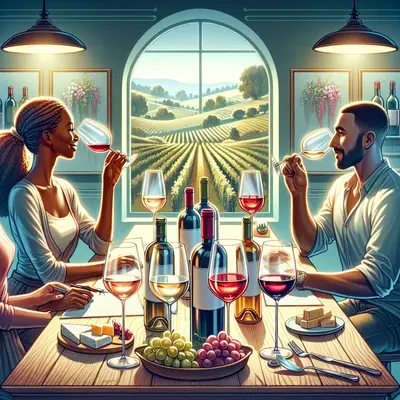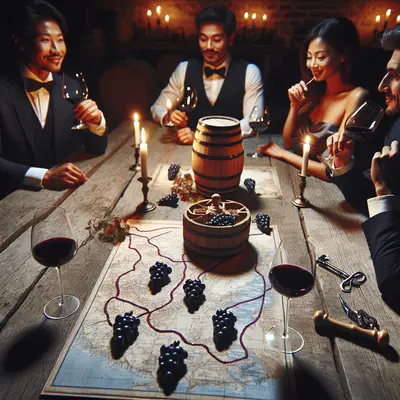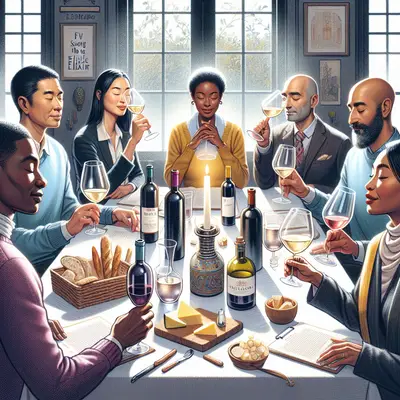
Wine tasting, at its most refined, is less a hobby than a cultivated language of nuance. For the traveler who seeks more than panoramic vineyard views and postcard-ready glasses, the true luxury lies in understanding what is quietly unfolding in the glass: structure, texture, time, and place. This is where tasting evolves from simply “liking” a wine to engaging with it—deliberately, curiously, and with a sense of quiet reverence.
Below are five exclusive, detail-rich insights that invite the serious enthusiast to taste not just more wines, but to taste more deeply.
The Architecture of Texture: Reading a Wine by Feel, Not Flavor
Many tastings dwell on aroma and flavor—berries, stone fruit, spice—but the most revealing dimension of a wine is often its texture. Just as fine fabrics differ in drape and hand-feel, great wines distinguish themselves in how they move across the palate.
Begin by paying attention to the wine’s “architecture”: the way acidity, tannin, alcohol, and body interlock. Is the wine linear, driving from front to back with a precise, almost architectural spine of acidity? Or is it more spherical, spreading softly across the mid-palate before tapering off like a curtain falling? This mental mapping of the palate is where connoisseurship quietly begins.
Tannins are particularly telling. In youthful reds, they may feel granular—think powdered cocoa or finely ground black tea—while in older wines they become more suede-like, integrated and textural rather than overtly grippy. White wines, too, have their own tactile signatures: a waxy, lanolin-like glide in aged Semillon; a chalky, almost powdery finish in precise Chablis; the subtle oiliness of a richly-textured Riesling.
As you taste, momentarily ignore aroma and flavor descriptors. Instead, articulate texture: coarse vs. fine, angular vs. rounded, supple vs. rigid. Over time, you will find that texture often reveals quality and provenance more reliably than flavor alone.
Time in the Glass: Letting the Wine Tell Its Own Story
In refined tastings, the most valuable commodity is not the rarest bottle—it is unhurried time with the wine. A serious enthusiast knows that a single glass evolving over forty minutes can yield more insight than ten rapid-fire pours.
Each wine has an internal timeline, and your role is to observe it. At first pour, note its initial stance: closed, reticent, or immediately expressive. Then, as oxygen begins to work, watch for the unfolding of secondary and tertiary layers. Aromas that seem monochrome at the start often gain dimension—fruit yielding to florals, then spice, then more savory or mineral tones.
Monitor changes in both nose and palate. Does the wine gain harmony as it opens, with harsher edges smoothing into a more seamless whole? Or does it fragment, losing definition and freshness? This capacity to improve—or collapse—with air is a subtle marker of quality and age-worthiness.
For structured reds, decanting is less about theatrics and more about calibration. A youthful Barolo or Bordeaux may need hours, while an older, more fragile wine can fade quickly once exposed. The sophisticated taster learns to match the aeration to the wine’s age and style, and then revisits it periodically, noting its narrative arc. Treat each glass as a living performance rather than a static snapshot.
Silence Before the Sip: Training a Calibrated Palate
One of the quiet luxuries of elevated wine tasting is the deliberate creation of a “neutral” moment before the glass touches your lips. A calibrated palate is not born; it is built—systematically, almost ritualistically.
Start by stripping away interference. Strong perfumes, heavily scented skincare, and lingering flavors from coffee, mints, or spicy foods all distort the sensory field. If possible, rinse your mouth with still water and wait a few minutes before serious tasting. At professional levels, tasters often begin by smelling and tasting neutral items—water, plain bread—to re-center their senses.
Consider the temperature and humidity of the space as well. Overly cold environments mute aromatics; overly warm ones can exaggerate alcohol. A refined tasting environment is calm, softly lit, and uncluttered—designed not as a backdrop for photos, but as a vessel for focus.
Then there is mental calibration. Before assigning labels—cherry, citrus, vanilla—take in the aroma with a brief pause of silence. Ask: is the impression high-toned or low-toned, bright or brooding, sweet-leaning or savory? Only after mapping these broad dimensions should you reach for specific descriptors. This discipline helps avoid suggestion and bias, allowing the wine’s own character, rather than your expectations, to lead.
Beyond Fruit: Discovering the Subtle Lexicon of Minerality and Savory Notes
For the seasoned enthusiast, the real fascination begins where simple fruit descriptors end. High-quality wines, particularly from distinctive terroirs, often carry an undercurrent of non-fruit complexity—those elusive notes we clumsily group under “minerality” and “savoriness.”
Minerality is not a single flavor, but a family of impressions: wet stone after rain, crushed slate, chalk dust, flint struck against steel, saline sea spray. These are not literal; they are metaphors our brains reach for when encountering certain combinations of acidity, texture, and subtle aromatic compounds. In Chablis, it may appear as a chalky, oyster-shell edge; in Mosel Riesling, a slate-driven, smoky tension; in some volcanic terroirs, a dark, basalt-like resonance.
Savory notes tell another part of the story. Hints of dried herbs, olive tapenade, tobacco leaf, leather, forest floor, or umami-rich stock often signal maturity, traditional winemaking, or cooler-climate origins. These nuances are especially evident in regions with a strong sense of place—think classic Burgundy, Northern Rhône Syrah, or aged Rioja.
To sharpen your awareness of these layers, taste purposefully beyond your comfort zone. Include wines from limestone-driven sites, volcanic soils, and high-altitude vineyards in your explorations. Over time, you will begin to recognize patterns—how certain terrains and climates consistently imprint a savory or mineral accent that transcends grape variety.
The Luxury of Context: Pairing Wines with Place, Season, and Emotion
For the truly devoted epicure, the most memorable tastings are not defined solely by what is in the glass, but by where, when, and with whom it is experienced. Wine, at its highest expression, is an art of context as much as content.
Instead of thinking of pairings only in culinary terms, consider situational harmonies. A taut, high-acid white served on a sunlit terrace overlooking the sea resonates differently than the same wine tasted under winter skies. A contemplative, aged red may feel wasted at a bustling, noisy gathering yet utterly transcendent in an intimate, dimly lit dining room with a slow, multi-course meal.
Seasonality is its own dimension of luxury. Crisp, precise whites and elegant rosés sing in spring and summer, especially alongside seasonal produce and lighter preparations. As autumn deepens, structured reds, complex orange wines, and oxidative whites echo the earthier, roasted notes of the table. Matching wine to the emotional temperature of the moment—celebration, reflection, reunion, or quiet solitude—elevates even familiar bottles into singular experiences.
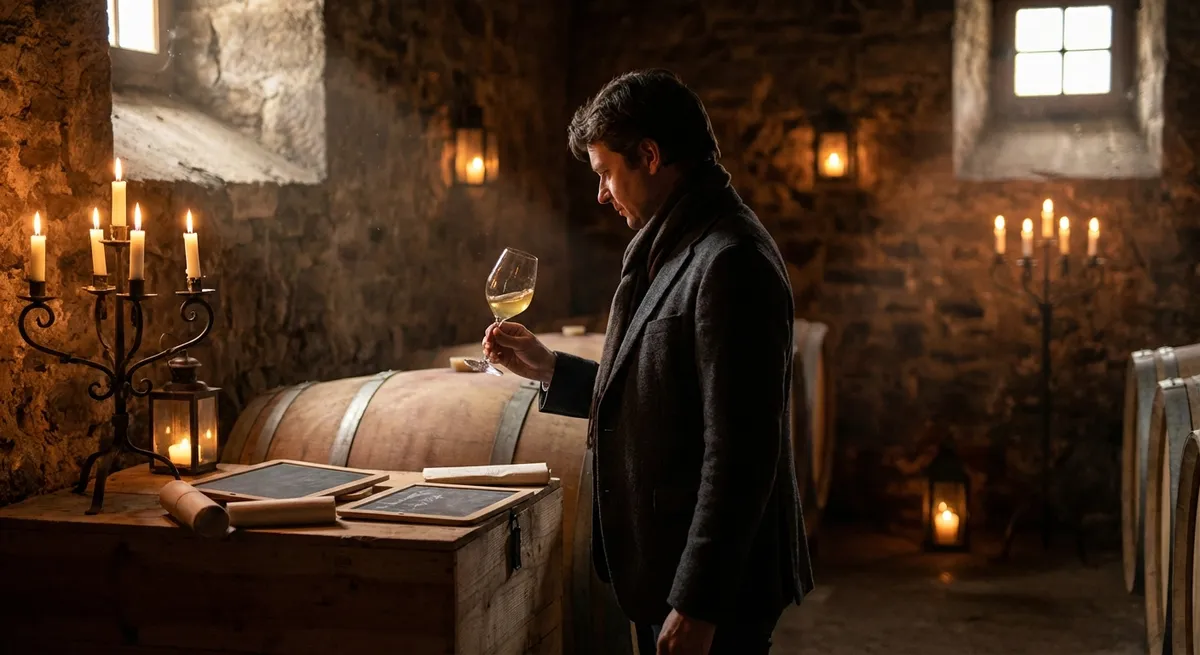
On a carefully curated wine tour, this philosophy transforms the itinerary. A morning tasting of saline whites in a coastal region, followed by a midday lunch among vines, and an evening encounter with aged reds in a candlelit cellar tells a complete, layered story of a place. The true connoisseur does not collect bottles alone; they collect these impeccably staged, context-rich memories.
Conclusion
To taste wine at a sophisticated level is to move beyond the obvious: beyond flavor lists, beyond label prestige, beyond the rush of quantity. It is an art of attention— to texture, to time in the glass, to the quiet preparation of one’s senses, to the subtle lexicon of minerality and savoriness, and to the carefully orchestrated context in which the wine is encountered.
For travelers who seek more than a cursory visit from one tasting room to the next, this approach offers something enduring: the ability to transform every glass, wherever in the world you raise it, into an experience of depth, clarity, and quiet luxury.
Sources
- [Wine Tasting 101: Learn How to Taste Wine Like a Pro](https://www.winespectator.com/articles/wine-tasting-101-how-to-taste-wine) - Wine Spectator’s foundational guide to professional tasting structure and technique
- [A Scientist’s Guide to Tasting Wine](https://www.bbc.com/future/article/20141217-a-scientists-guide-to-wine-tasting) - BBC Future article exploring the sensory science behind wine tasting and perception
- [The Science of Wine Tasting](https://www.ucdavis.edu/food/news/science-wine-tasting) - UC Davis overview of research on aroma, flavor, and the sensory evaluation of wine
- [Terroir and Wine: Understanding the Role of Soil and Climate](https://www.decanter.com/learn/terroir-definition-329182/) - Decanter’s explanation of terroir, minerality, and how place influences wine character
- [How to Taste Wine Like a Somm](https://www.foodandwine.com/wine/how-to-taste-wine) - Food & Wine’s practical breakdown of advanced tasting cues and sommelier-level focus
Key Takeaway
The most important thing to remember from this article is that this information can change how you think about Wine Tasting.