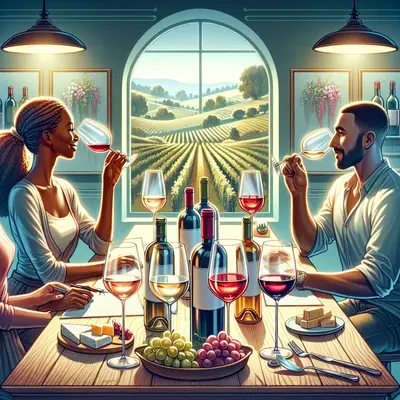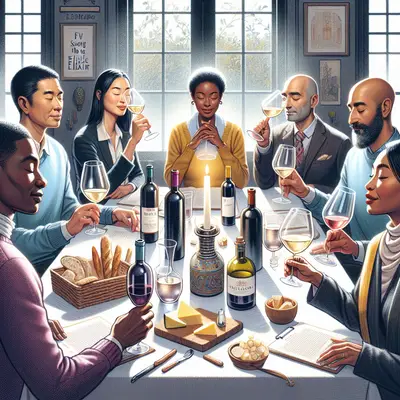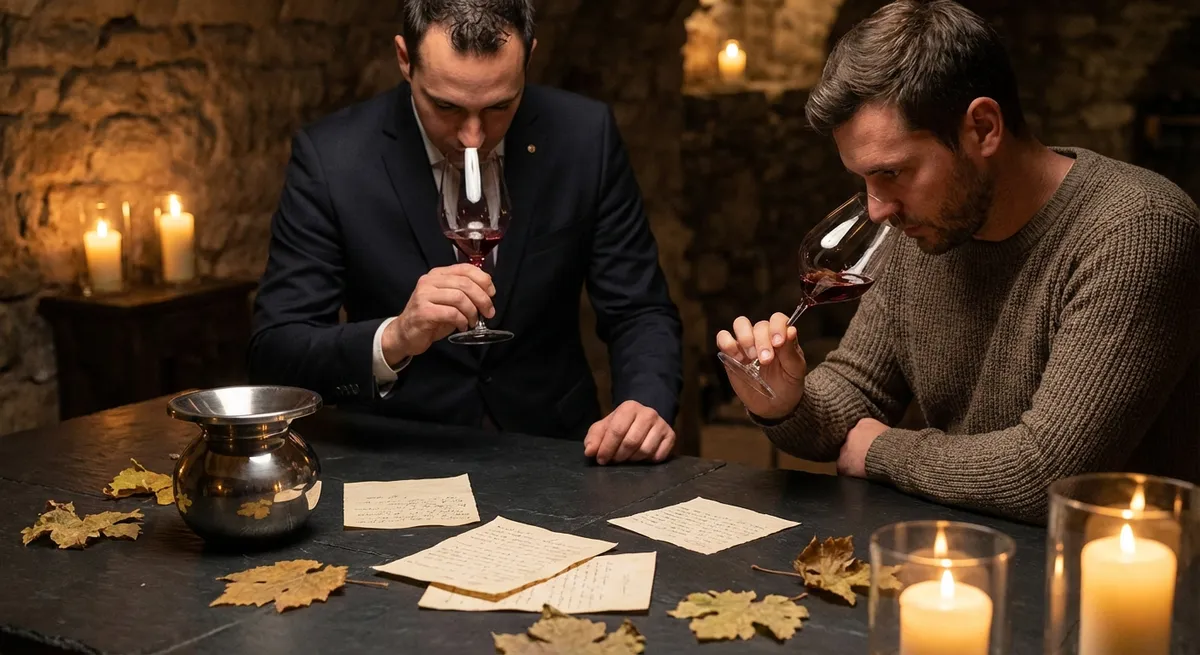
There is a quiet threshold in wine appreciation where tasting evolves from pleasant ritual into a finely tuned act of perception. This is where serious enthusiasts linger: in the space between obvious flavor and subtle suggestion, between what is poured and what is implied. At Wine Tour Adventures, we curate experiences for travelers who are no longer satisfied with “red or white,” but who seek refinement, precision, and the intimate stories that live in each glass.
This guide explores five exclusive insights designed for the attentive palate—those ready to move beyond standard tasting notes and into the realm of deliberate, elegant observation.
Setting the Stage: Taste Begins Before the First Sip
Long before the wine touches your lips, the environment has already begun editing your experience. Lighting, temperature, glassware, even the soundscape in the tasting room all influence how you will interpret a wine’s character.
Soft, neutral lighting allows you to properly assess color and clarity without the distortion of bright neon or orange-hued bulbs. The ambient temperature of the room matters just as much as the temperature of the bottle: a warm room can mute acidity and exaggerate alcohol, while a cool space can sharpen edges and make tannins seem more pronounced. Fine stemware with a thin lip and generous bowl is not vanity; it directs aromatic compounds to the nose and palate with greater precision, particularly in wines with layered bouquets.
Attuned travelers choose tasting rooms that understand this choreography. A well-curated environment signals a winery’s respect for the wine—and for you as a thoughtful taster. When booking your next tour, consider the sensorial design of the spaces you’ll inhabit, not just the lineup of bottles.
Insight 1: Reading Texture as Carefully as Flavor
Most enthusiasts can list flavors; far fewer can articulate texture. Yet texture is often what separates a pleasant wine from an unforgettable one.
Pay attention to how the wine moves across your palate: is it featherlight, satiny, or almost glycerol in weight? Acidity manifests not just as “freshness” but as a vertical, mouthwatering tension that pulls the wine upward, giving it energy. Tannins can feel like suede, chalk, or fine graphite powder—each giving a different structural impression even when fruit profiles are similar.
A refined taster does not simply note “smooth” or “bold.” Instead, they observe whether the wine’s weight is in harmony with its aromatic profile, whether the mid-palate feels hollow or fully engaged, and how the wine resolves. Texture becomes a language: you begin to distinguish wines not only by what they taste like, but by how they inhabit space inside the mouth.
Insight 2: Mastering the Arc of the Sip
Every sip has a narrative arc: opening, mid-palate, and finish. Advanced tasters learn to slow this sequence down, almost as if they are watching it frame by frame.
First, focus on the attack—the initial impression in the first second or two. Is it immediate and expressive, or reticent and slow to reveal itself? Next, observe the mid-palate: this is where the structure, fruit, and secondary notes should converge. Wines that dazzle in the opening but collapse in the center often feel impressive for a moment, but lack gravitas.
Finally, linger on the finish. Count the seconds the flavors remain distinct and pleasurable after swallowing or spitting. A long finish is not just a sign of quality; it’s evidence of balance and concentration. What persists—fruit, minerality, spice, a saline echo, or a gentle bitterness—tells you about the wine’s construction and its potential to age.
Treat each sip as a composed trajectory rather than a single moment. On a premium tour, this approach unlocks the deeper intent behind a winemaker’s choices and separates fine wines from merely competent ones.
Insight 3: Calibrating Your Palate to Temperature and Time
Elite tasters rarely accept a wine as fixed. Instead, they observe how it behaves as temperature and oxygen quietly reshape it over time.
As the wine warms slightly in the glass, pay attention to shifts in aromatic intensity and balance. A structured red served just below room temperature may reveal more precision in its tannins and allow its fruit to stay fresh and delineated. A textured white, gently chilled but not icy, will often show greater complexity in its floral and mineral components.
Equally critical is how the wine evolves in the glass over 20–40 minutes. Do new aromatic layers appear, or does the profile flatten and become monochromatic? A wine that unfolds gracefully over time suggests thoughtful winemaking and the potential for graceful aging—a detail particularly meaningful when you are evaluating bottles to add to your cellar during a visit.
On your next tour, request to revisit earlier pours later in the tasting. This single habit transforms a passive lineup into a living study of time, temperature, and evolution.
Insight 4: Listening for Place in the Glass
Beyond grape variety and barrel regime lies something more elusive: the whisper of place. This is where enthusiasts begin to discern whether a wine could realistically come from anywhere—or only from somewhere.
Minerality, while debated scientifically, is a useful sensory shorthand. Saline edges, subtle smokiness, crushed stone, or chalky impressions can be markers of certain soils and microclimates. Cool-climate wines may present fresher acidity and more restrained fruit; warmer sites may yield riper texture and deeper, darker flavor profiles. Neither is objectively superior, but each carries a distinct sense of origin.
During winery visits, listen closely as the team speaks about elevation, prevailing winds, soil compositions, and vineyard orientation. Then, with intention, seek those signatures in the glass. Over time, you will begin to recognize patterns: the taut linearity of high-altitude sites, the breadth of valley-floor vineyards, the maritime imprint in wines from coastal regions.
For the seasoned traveler, this is where tasting becomes cartography—drawing emotional and sensory maps of the places you’ve explored among the vines.
Insight 5: Curating Your Own Tasting Narrative
Premium wine touring is no longer about passively receiving a predetermined flight. The most rewarding experiences come when you begin to design your own narrative across visits, vintages, and regions.
Build comparative frameworks into your journeys: taste the same grape from different altitudes, or the same vineyard across multiple vintages. Explore how one producer handles both entry-level and flagship cuvées. Document your impressions in succinct, precise language—focusing on structure, energy, and evolution rather than only on specific fruit descriptors.
In doing so, you assemble a personal archive of taste, one that grows more articulate with every trip. You start to recognize the “handwriting” of your favorite winemakers, the stylistic signatures of certain appellations, and your own preferences with refined clarity. This curated narrative transforms each wine tour from an isolated event into a continuous, elevated education.
Conclusion
For the discerning enthusiast, wine tasting is less about spectacle and more about attention: to texture, to time, to place, and to the quiet architecture of each sip. When these five insights inform your next journey, every tasting room becomes a salon of discovery, every glass a finely composed conversation.
At Wine Tour Adventures, we believe the most memorable experiences are not the loudest, but the most exquisitely observed. With an attentive palate and a deliberate approach, you step beyond simply liking a wine—and into truly understanding it.
Sources
- UC Davis Department of Viticulture and Enology - Academic perspectives on sensory evaluation and wine-tasting techniques
- Wine Institute - Overview of winegrowing regions and how geography influences wine character
- Decanter – How to Taste Wine Like a Pro - Professional guidance on structure, finish, and assessing quality
- Harvard T.H. Chan School of Public Health – The Nutrition Source: Alcohol - Evidence-based information on alcohol and health for responsible enjoyment
- Institute of Masters of Wine – The MW Exam Syllabus - Insight into the advanced analytical approach used by top-level wine professionals
Key Takeaway
The most important thing to remember from this article is that this information can change how you think about Wine Tasting.