There is a moment, just before the first swirl of the glass, when a vineyard reveals itself—not in broad strokes, but in quiet, impeccable details. For discerning wine travelers, a vineyard visit is no longer a simple tour; it is an immersion in place, craft, and time. At Wine Tour Adventures, we believe the most memorable experiences are often the most subtle—those that unfold gently, for guests who know how and where to look.
Below, you’ll find five exclusive, refined insights designed to transform your next vineyard visit from pleasant excursion to curated, collector-level experience.
Interpreting the Landscape: Reading Terroir Beyond the Tasting Notes
Before the first pour, the vineyard itself is already telling the story of the wine. A sophisticated visitor treats the landscape as the prologue to every glass.
Walk the rows with intention. Note the gradient of the slope—steeper inclines often yield more concentrated fruit, as water drains more efficiently and vines struggle just enough. Observe the orientation of the vines: south- or southwest-facing slopes in cooler climates can hint at riper, more generous wines, while east-facing exposures may produce fresher, more linear profiles.
Soil is not merely a technical detail; it is a textural clue to the style of the estate. Chalk and limestone often signal tension, salinity, and elegance. Gravel can indicate power and structure. Clay may suggest breadth and richness. If the estate offers a vineyard walk, accept immediately—and ask to see blocks producing their flagship cuvée. The contrast between parcels, even a few rows apart, will teach you more about terroir than any tasting-room script.
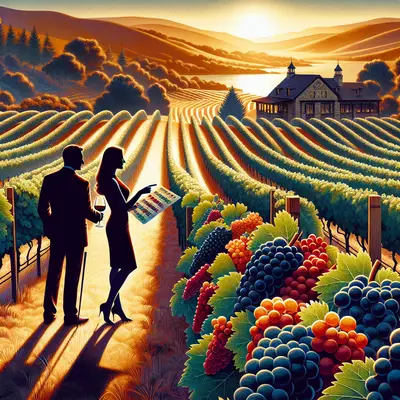
For serious enthusiasts, comparing a vineyard map to the wines you taste is revelatory. A quietly framed parcel map on the wall is an invitation: inquire which blocks contribute to specific bottlings, and ask how the personality of each site is expressed in the final blend. You are no longer just visiting; you are learning to read the vineyard as a sommelier does.
Private Library Tastings: Where a Producer’s True Character Emerges
Public tastings are the overture; the library is the symphony. If a property offers an older-vintage or “library” experience—even if it is not listed openly—this is where their philosophy and patience truly come into focus.
Mature wines reveal the precision of cellar work and the seriousness of vineyard practices in a way young wines simply cannot. Subtle oak integration, tannin management, and acid structure are easier to assess after a decade or more in bottle. A producer confident in their craft will often welcome the chance to pour a back-vintage to an informed guest.
When arranging your visit, discreetly inquire about the possibility of tasting an older year alongside the current release. A vertical of three vintages—ideally a cool year, a warm year, and a so-called “classic” year—provides a masterclass in how the estate navigates climate variation. Take notes on how the house signature (texture, balance, aromatic profile) persists across vintages, even as weather shifts. This continuity is the hallmark of a serious domaine.
Exclusive insight: ask to see the back label or cellar notes for the older vintages. Changes in picking dates, fermentation styles, or barrel regimes over time will deepen your understanding of where the estate is headed—and whether that aligns with your palate.
Decoding the Cellar: Subtle Clues That Separate Good From Exceptional
Premium wineries rarely announce their excellence; it is encoded in the quiet choreography of the cellar. As you step into the barrel room or fermentation hall, train your eye on details that professionals immediately notice but casual visitors overlook.
Temperature and humidity control are non-negotiable in a top-tier cellar. Subtle coolness in the air, slight condensation on tanks, and a lack of strong odors (other than neutral wood and clean stone) suggest meticulous care. Note the cleanliness around drains, barrel racks, and hose connections—no sticky residue, no fruit flies, no clutter. A pristine cellar is rarely coincidence; it reflects disciplined, daily attention.
The diversity of vessels—oak barrels, concrete eggs, amphorae, stainless steel—can also signal an experimental, quality-driven mindset. Ask why they chose specific materials for particular parcels or varieties. A thoughtful answer that connects vessel choice to texture, aromatics, and age-worthiness indicates deep technical understanding, not trend-chasing.
Exclusive insight: watch how staff move through the space. Are they methodical, calm, and purposeful, with measured handling of hoses, pumps, and barrels? That quiet professionalism often correlates directly to precision in the glass. Great wines are rarely born in chaotic cellars.
Timing Your Visit: Harvest, Shoulder Seasons, and the Art of Access
The calendar can be as important as the estate you choose. The same winery can feel entirely different in July, September, or November, and serious enthusiasts leverage timing as a strategic advantage.
Harvest season is captivating but complex. Early mornings bring the most authentic energy: picking crews in the vineyard, fruit arriving at the crush pad, fermentations just beginning to whisper in tank. This is when you see the estate fully alive, but access can be limited and staff stretched thin. If you visit at this time, opt for a focused, shorter experience and be flexible—directors of winemaking may only have a narrow window to host you, and respecting that schedule often opens doors.
The shoulder seasons—late spring and late autumn—offer quieter, more contemplative visits with more generous time from key staff. In spring, you observe pruning strategies and the onset of the growing season; in late autumn, you may glimpse post-harvest blending trials, barrel topping, and cellar decisions that shape future releases.
Exclusive insight: when booking, ask not just for a date, but for a moment in the estate’s yearly rhythm. For example: “Is there a time when you are tasting blends in barrel or making decisions on the next bottling? I’d love to visit when that aspect of your work is underway.” This phrasing signals both respect and seriousness, and often results in more intimate, behind-the-scenes access.
Curating Your Own Comparative Tasting: Becoming a Co-Creator of the Experience
The most refined vineyard visits are not passive; they are thoughtfully curated collaborations between guest and estate. Instead of simply accepting a pre-set flight, consider designing a micro-comparative tasting in conversation with your host.
Focus on one axis of comparison at a time. That could be:
- Single-vineyard versus estate blend
- Different clones of the same grape
- Varying levels of oak influence
- Wines from different elevations or soil types
Propose a theme that genuinely interests you—for instance, “I’m fascinated by how elevation and exposure affect your Cabernet. Would it be possible to taste one wine from a higher, cooler block alongside something from a warmer site?” This targeted curiosity invites the estate to showcase their depth.
During the tasting, approach each glass with a collector’s attention: evaluate texture first (grain of the tannin, shape on the palate), then aromatics, then length. Ask your host how they would position each wine in a cellar: which is built for early pleasure, which demands a decade, which might be entering a perfect window now. You are not just tasting; you are quietly calibrating your own aging strategy against the producer’s.
Exclusive insight: close your visit by purchasing not just your favorite bottle, but also one that intrigued you, even if it seemed slightly austere or tightly wound. Note the estate’s recommended drinking window, and add your own projected date based on what you observed. When you finally open it, you will be tasting not only the wine, but the evolution of your own discernment.
Conclusion
A vineyard visit, at its most refined, is an ongoing conversation with place, time, and craft. The vineyards you walk, the library bottles you taste, the cellar you quietly observe, the timing you choose, and the comparisons you curate—all of these transform a simple tour into an artfully composed experience.
For those willing to look beyond the obvious, each estate becomes a living archive of decisions and philosophies, etched into every row and every barrel. When you depart with a few carefully chosen bottles and a deeper understanding of the people and principles behind them, you carry home more than wine—you carry a narrative that will unfold, glass by glass, for years to come.
Sources
- Institute of Masters of Wine – Understanding Terroir – A detailed exploration of how soil, climate, and topography shape wine style and quality
- UC Davis Viticulture and Enology – Technical resources on vineyard management, winemaking practices, and cellar decisions
- Wine Institute – California Winegrowing Regions – Background on regional climates, soils, and geography relevant to interpreting vineyard sites
- Harvard T.H. Chan School of Public Health – Wine and Health – Evidence-based overview of wine consumption in a health context, useful for informed, responsible enjoyment
- Decanter Magazine – Guide to Wine Vintage and Cellaring – Insight into vintages, aging potential, and how maturity influences the tasting experience
Key Takeaway
The most important thing to remember from this article is that this information can change how you think about Vineyard Visits.