There is a moment, just after you step from gravel to earth between the vine rows, when the noise of the world falls away. The vineyard is not only where wine begins; it is where your understanding of wine can become quietly, irrevocably more profound. For discerning travelers, a vineyard visit is no longer a casual tour—it is a curated immersion into craftsmanship, culture, and time. When approached with intention, the experience reveals layers that even seasoned enthusiasts often overlook.
Below are five exclusive, nuanced insights that transform a pleasant winery stop into a truly elevated vineyard encounter—one that lingers long after the last glass is drained.
The Vineyard Clock: Reading Time in the Rows
Every vineyard keeps its own time, and your visit’s true luxury lies in aligning yourself with that rhythm. Beyond the standard tour schedule, there are subtle “golden hours” when the vineyard’s personality is most legible.
Arrive early—truly early—and the vines tell a different story. Morning light sharpens the contours of the landscape, making slope, aspect, and elevation unmistakable to the eye. You can see where fog recedes last, where cool air settles, where old vines twist more gnarled on the harsher plots. Later in the afternoon, as the sun leans low, shadows reveal the geometry of trellising and canopy management, exposing how the estate balances shade, airflow, and ripeness.
Ask to walk the rows that define the estate’s flagship wine, not just the most photogenic blocks. The vines you’re shown at midday for pictures are rarely the same parcels that quietly underpin the estate’s reputation. Time your visit to overlap with a key moment in the growing season—bud break, veraison, or harvest—and you will witness decisions being made in real time, not re-told in the tasting room.
In an elevated visit, the clock is not the schedule printed on your confirmation email; it is the shifting interplay of light, temperature, and human hands moving through the rows.
Beneath the Surface: Soil, Stones, and the Architecture of Flavor
True vineyard intimacy begins when you look down, not just around. The most devoted estates treat soil as architecture—carefully studied, mapped, and sculpted—because they know the glass ultimately speaks the language of the ground.
Request to see a soil pit if the estate has one, or walk to a cut in the land where the strata are visible. Notice whether the topsoil is shallow or deep, how stones are distributed, how roots search downward. Clay-rich sites often lend wines structure and depth; gravel and stones suggest refinement and lift; limestone frequently whispers of tension and finesse. You do not need to become a geologist; you only need to start associating textures underfoot with textures on the palate.
Pay attention to cover crops: are there wildflowers, clover, grasses, or bare soil? A thoughtful ground cover signals a philosophy of balance, erosion control, and microbial life. The most forward-thinking properties often speak as passionately about earthworms and root systems as they do about barrels and fermenters.
When you later taste the wines, ask which parcels contribute to which cuvées, and mentally return to the plots you walked. The connection between soil structure and flavor architecture will not be theoretical—it will be something you have stood on, held, and breathed in.
The Silent Decisions: Observing Viticulture as Craft, Not Backdrop
In refined vineyard visits, the vines are not scenery; they are an open ledger of choices. The more closely you look, the more you can read.
Notice pruning styles: are canes neatly laid along wires, or are spurs spaced like careful notes on a staff? Minimal, precise cuts suggest a philosophy of restraint; heavier pruning can indicate a focus on yield control and vine balance. Examine the canopy—are leaves trimmed strictly or allowed a bit of wildness? Too tight a canopy can mean shading and rot risk; too open and the fruit may suffer from sunburn. Each choice is a declaration of how the estate defines ripeness and concentration.
If you visit near harvest, observe picking strategy. Are grapes hand-harvested into small crates or machine-picked in bulk? Are crews working at night or at dawn to preserve freshness, or in full afternoon heat? These quiet decisions directly shape aromatic purity, texture, and longevity.
Ask the viticulturist (or your guide) about their philosophy: organic, biodynamic, sustainable, or integrated. Not simply as labels, but as lived practices. Which treatments are minimized or avoided? How do they handle disease pressure or drought? The most serious estates will answer with specificity: dates, trials, adjustments—never vague platitudes. Listening to how they articulate these silent decisions tells you as much about the wine’s character as any tasting note.
Barrel Rooms and Beyond: Decoding the Language of the Cellar
For many visitors, the cellar is a backdrop for photographs. For the informed traveler, it is a library of intent. Barrels, tanks, and vessels are less décor than dialects in which the estate chooses to speak.
When you enter the cellar, look beyond the aesthetics. What proportion of the wines age in stainless steel, concrete, neutral oak, or new oak? Cylindrical steel may favor precision and fruit purity; concrete often indicates a desire for texture and micro-oxygenation without flavor overlay; large, old foudres suggest a preference for nuance over overt wood signatures. Amphorae and clay vessels, increasingly common at ambitious estates, point to experiments with texture, oxidation, and a more elemental expression of fruit.
Ask what percentage of new oak is used for the top wines, and for how long. A sophisticated estate will describe oak as seasoning, not as a primary flavor. They may discuss forests (Allier, Nevers, Vosges), toast levels, or coopers by name. Listen for how the winemaker speaks about time in barrel: is it a fixed schedule or responsive to each vintage?
Take note of fermentation choices: indigenous yeasts versus selected strains, whole-cluster versus destemmed, gentle infusion versus aggressive extraction. These are not technical footnotes; they are decisions about texture, perfume, and age-worthiness. In a premium visit, the cellar ceases to be a cave of mystery and becomes a visible, intelligible map of how fruit becomes narrative in the glass.
From Glass to Landscape: Tasting as Cartography
The most memorable vineyard visits end with a tasting that feels less like a product presentation and more like cartography—each wine a distillation of a specific place and moment you have just walked through.
As you taste, resist rushing to descriptors alone. Instead, trace each wine back to the elements you’ve observed: the cooler slope that held the morning fog, the gravel seam underfoot, the parcel whose canopy was subtly more open. When a wine shows tension and verticality, recall the calcareous soil and the wind that funneled through that block. When you encounter weight, depth, and plush tannin, remember the warmer, lower parcel with richer, darker earth.
Ask to taste single-parcel wines or component lots if available—many estates will accommodate this for serious visitors, by appointment. This reveals how individual blocks contribute acidity, structure, aromatics, or mid-palate weight to the final blend. You are no longer just tasting “the estate red”; you are tasting the dialogue between different corners of the property.
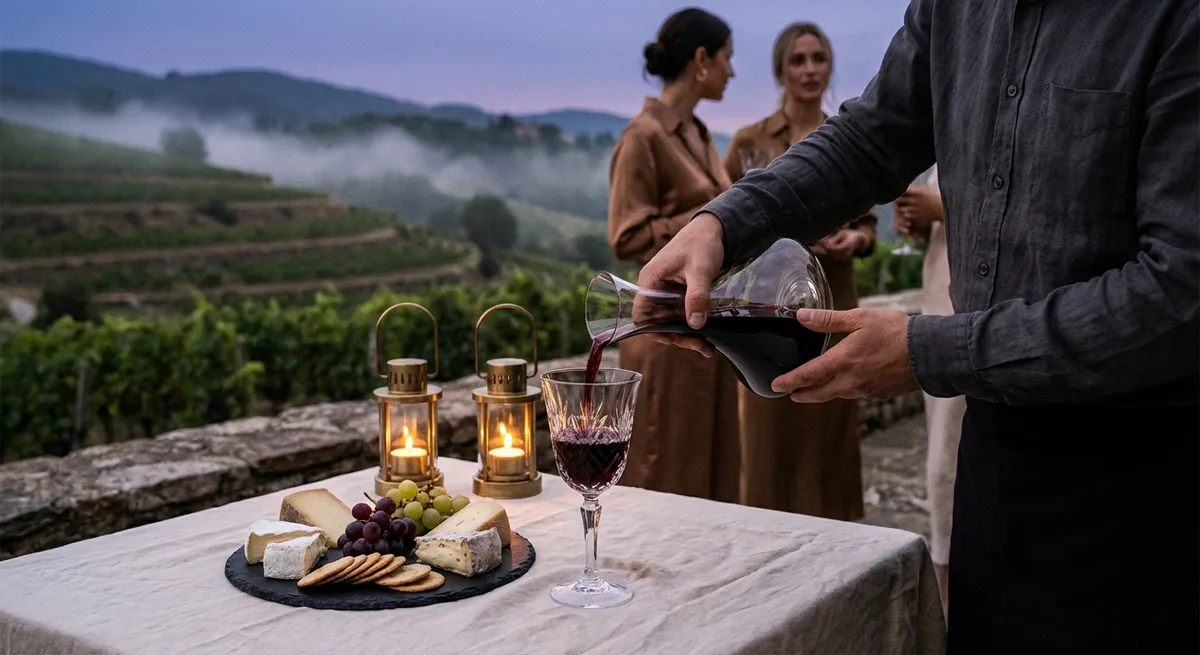
Finally, pay attention to the stemware, serving temperature, and pacing. Premium wineries increasingly treat tastings as curated experiences: glasses designed for specific varieties, a deliberate sequence that moves from tension to generosity, and measured pauses for reflection. Use those pauses. Revisit the wine after a few minutes; notice how it changes, just as the vineyard’s light shifted earlier in the day. The most sophisticated pleasure of a vineyard visit is recognizing that wine is not static—it is a moving conversation between land, time, and your own attention.
Conclusion
An elevated vineyard visit is not defined by how exclusive the appointment feels or how rare the bottles are, but by the clarity with which it reveals the journey from place to glass. When you learn to read the vineyard’s clock, to feel the architecture of the soil, to notice the viticultural craft, to decode the cellar, and to taste as cartography, you step beyond tourism into true understanding.
For the refined traveler, this is the quiet luxury of wine: the ability to stand in a particular row, at a particular hour, and taste not just a beverage—but the sum of choices, seasons, and soils that brought it into being. It is in those whispers between the vines that the most enduring wine stories are told.
Sources
- Napa Valley Vintners – Viticulture & Winemaking – Overview of vineyard practices, terroir, and winemaking decisions in a leading fine-wine region
- Bordeaux Wine Council (CIVB) – Terroir & Appellations – Explains how soil types, climate, and geography shape wine styles in Bordeaux
- University of California, Davis – Terroir and Wine Quality – Educational resource on the science behind terroir, soil, and vineyard influence on wine
- Burgundy Wine Board (BIVB) – Understanding Climats and Soils – Insight into how micro-terroirs and vineyard parcels express themselves in the glass
- OIV (International Organisation of Vine and Wine) – Oenological Practices – International reference on viticultural and oenological standards and techniques
Key Takeaway
The most important thing to remember from this article is that this information can change how you think about Vineyard Visits.